
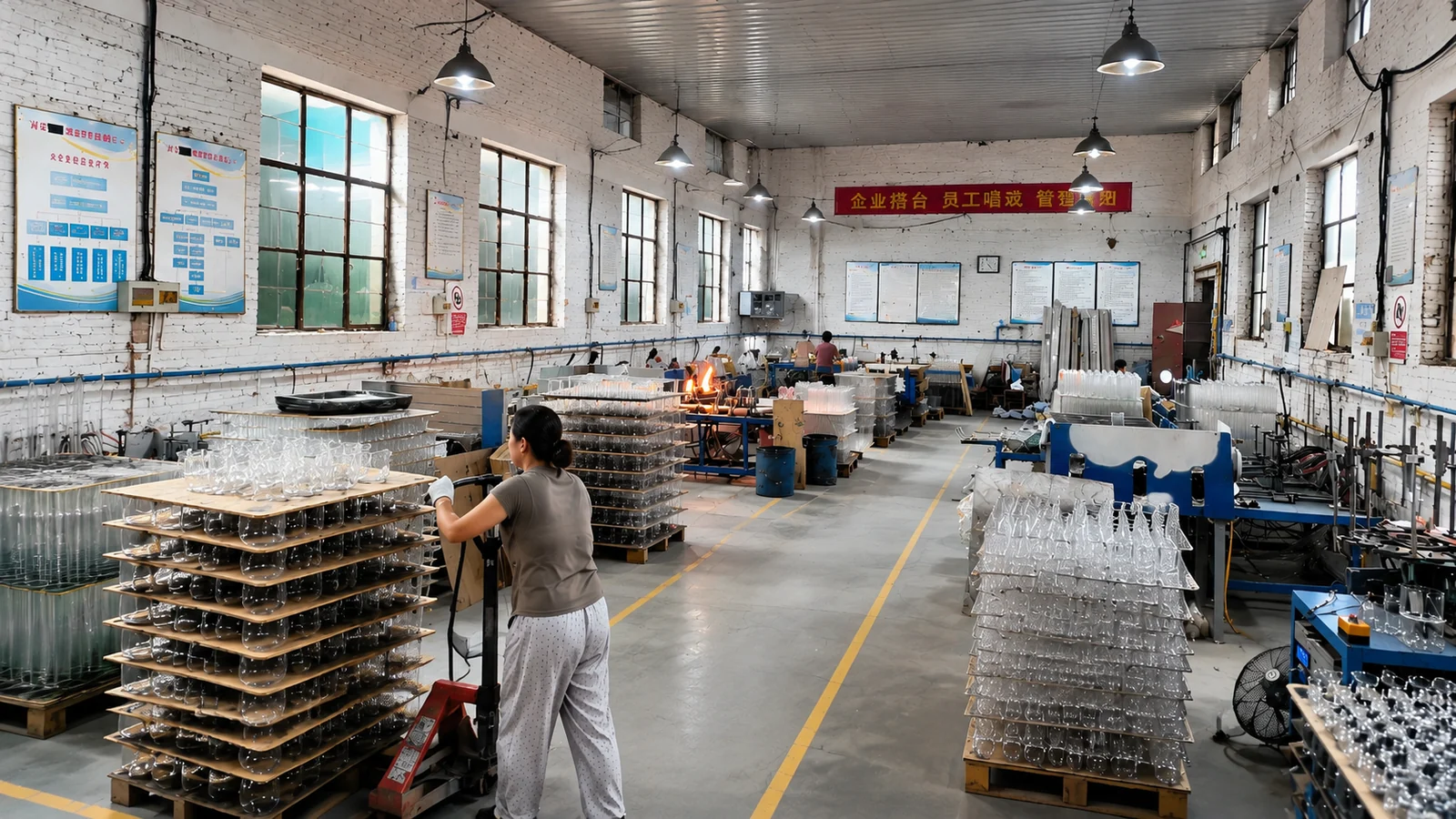
Restaurant-chain glassware is an operating item before it is a design object. It passes through servers' hands, trays, dishwashing, storage racks and repeated replenishment. A cup that looks right in a presentation can still be the wrong choice if its usable fill is unclear, its base does not sit well on the tray, its variants are difficult to replace or its carton allocation does not match the store network.
When restaurant and hospitality buyers contact us, we start with the service system. Guangyi Glass coordinates current glassware models and OEM projects with responsible production partners confirmed per order. We do not claim that one product is suitable for intensive commercial use until the selected sample and the buyer's own operating conditions have been reviewed. Our role is to turn the service brief into measurable product, packing and replenishment decisions.
Build the range from menu and service steps
The first question is not how many glass shapes the catalogue offers. It is how many jobs the chain needs the range to perform. We ask for beverage list, serving volume, ice use, garnish, refill practice, tray size, wash-and-store routine and the number of service points. A nominal 350 ml capacity does not tell us the intended fill after ice and headspace. The buyer should approve both total capacity and service fill on the physical sample.
We then create a small range map. One tumbler may cover water and soft drinks, one handled or heat-suitable product may cover a hot-drink need after verification, and one pitcher may cover table service. Adding a different shape for every menu item can increase training, storage and replacement complexity. We prefer a reason for each SKU.
For every proposed item, the brief should record:
- menu use and intended fill;
- total capacity and key dimensions to verify;
- rim, base, weight and hand-feel priorities;
- tray, rack and storage constraints;
- logo or measurement-mark requirement;
- units needed per opening and replenishment plan.
Our restaurant glassware guide covers category selection in more detail. For a chain, we add the cross-location control layer.
Test the sample in the real operation
A buyer's sample review should not stop at a meeting-room table. We recommend running the shortlisted item through the actual service sequence: prepare the beverage, carry it on the normal tray, place it at the table, collect it, wash it using the chain's process and store it in the available rack or shelf. Staff feedback can expose a rim, balance or footprint issue that a catalogue dimension cannot.
This is also where buyers should verify claims. Glass material and manufacturing route affect the questions to ask, but words such as “durable,” “heat-resistant” or “dishwasher-safe” need a model-specific basis. We do not infer performance from appearance. If a defined test or document is required, we agree on the exact product, method and evidence before making a commercial claim.
Current-model samples are commonly prepared in 5–10 days according to our verified product information once the model and sample conditions are clear. Decoration, custom colors, new molds or a complete chain pack require a separate schedule. Courier transit and restaurant evaluation time are additional. We suggest keeping a signed or clearly photographed approval reference for the purchasing and QC teams.
Standardization protects replenishment
For a chain, the first order is only half the decision. Stores will need replacements. We ask whether the model is intended as a short campaign, a seasonal item or a core operational SKU. A current model is generally easier to review for a trial than a fully new shape, but future availability still needs to be checked at each order. We do not promise indefinite continuity without a supply agreement and current production confirmation.
The specification should use measurable identity rather than only a marketing name. Model code, dimensions, capacity basis, color, decoration file, pack count and approved visible limits help the buyer recognize a matching replenishment lot. If the chain later accepts a substitute, that substitute should go through the same service trial instead of being approved from a similar photograph.
Range discipline also matters. One core SKU with meaningful volume creates a clearer QC and replenishment record than the same total quantity divided across many shapes and logo versions. A restaurant group's regional differences may be necessary, but each difference should have an owner and SKU code.
MOQ should be calculated by rollout version
There is no universal restaurant-chain MOQ. It depends on the existing model, decoration, color, new development, accessories and carton format. Some verified current-model pages list a 500–1,000-piece trial-order range for that particular SKU. We confirm the exact number after reviewing the finished configuration.
The important calculation is quantity per finished version. If the chain has one logo but five regional carton labels, those labels may create separate packaging minimums even when the glass is identical. If each store receives a mixed opening kit, the assembly work and allocation method must also be quoted.
For a pilot, we can review ways to reduce setup: select a current clear model, use one approved decoration, keep one common carton and add market labels only where required. This does not guarantee every project can run at low MOQ. It gives the production and packaging partners a coherent route to evaluate.
Logo placement must survive use and handling
A restaurant logo is often seen at the table, but it also passes through service contact and washing. We review printable area, curvature, artwork size, color reference and the expected use route. A large flat artwork can distort or lose visual balance on a tapered glass. A decoration close to the rim may create different production or use questions from one placed lower on the body.
We ask for editable artwork and prepare a decorated sample when branding is part of the order. Pantone references help define the target, but the approved physical result and agreed tolerance should control bulk acceptance. We do not promise a screen display as an exact production color.
Some restaurant buyers choose no logo on the glass and place identity on menus, coasters or packaging to simplify replenishment. Others need a measured fill line or branch-specific mark. These are commercial decisions; our job is to show how each one affects sampling, MOQ, QC and replacement.
QC should match restaurant risk
The chain's inspection plan should focus on what disrupts service or brand consistency. We normally separate:
- identity: correct model, capacity version and quantity;
- function: rim and base condition, component fit and agreed measurable points;
- appearance: visible finish against the approved product route;
- branding: artwork version, position and visible result;
- packing: count, separation, carton mark and store allocation.
The buyer should define critical defects and realistic appearance limits before bulk work. Machine-made and handmade glassware cannot be judged with the same assumptions. Decorated items also add their own acceptance points. Our quality-control process provides the framework; the final checklist belongs to the selected restaurant SKU.
If the chain uses third-party inspection, we align the sampling method and release rule before the visit. If an exception appears, one authorized buyer contact should decide whether to sort, rework, replace or accept within the agreed commercial terms.
Pack for central warehouses and individual stores
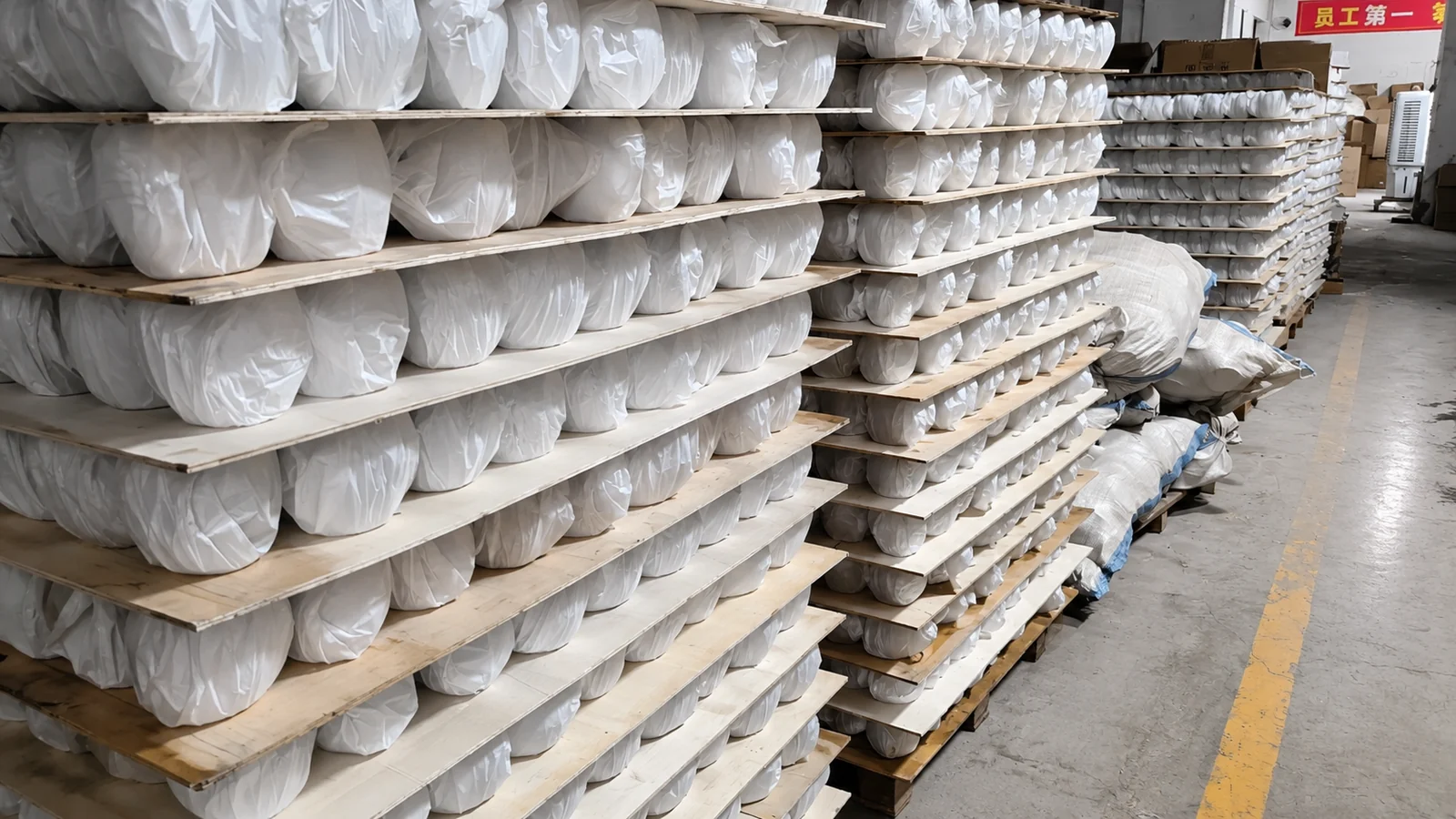
Opening stock, central replenishment and direct-to-store delivery may need different allocation. We ask where cartons will be opened and whether the receiving team needs mixed kits or single-SKU cartons. Single-SKU cartons simplify counting and replacement; mixed kits simplify some opening projects but add assembly and checking work.
Glass-to-glass contact, rim exposure and movement inside the carton should be controlled. Carton weight should be practical for the planned handling route. Store or region labels must identify contents without opening the pack. Retail gift presentation is usually unnecessary for back-of-house stock, while replacement protection remains essential.
We confirm carton dimensions and weights from the approved packed configuration before freight planning. Our export packaging page shows why master-carton decisions belong in the product specification.
Plan a pilot before the full network rollout
A pilot is useful when it tests real questions, not when it is only a smaller purchase. Select representative locations or service conditions, record opening quantity, track staff feedback, washing and storage issues, and note replacement demand. Decide in advance what result would trigger a specification change.
After the pilot, freeze the approved model and update the roll-out quantity matrix. If the logo, pack or carton allocation changes, treat that as a controlled revision. A chain launch can be delayed by internal approvals, regional label files or store allocations as easily as by production, so we build a schedule from the date those inputs are frozen.
Bulk production time is confirmed per project. We do not give one number for current models, decoration, printed cartons and new molds. Buyers should also separate production, final inspection, booking and international transit. See our production-time guide for a gate-based schedule.
Compare total operating cost, not only piece price
Unit price matters, but restaurant buyers should also consider pack quantity, breakage in distribution, storage density, washing fit, staff handling, range complexity and replacement minimums. A cheaper glass that creates an extra SKU, poor rack fit or difficult replenishment may cost more across the network.
We make quotations comparable by naming the model, decoration, pack, quantity per SKU, inspection scope and Incoterm. If the chain needs opening kits or branch labels, those services should be visible rather than hidden in an assumed unit price.
Buyer FAQ
What glassware is best for a restaurant chain?
The best range fits the menu, intended fill, tray and washing routine, storage system and replacement plan. We recommend testing shortlisted physical samples in actual service instead of choosing only by style.
What is the MOQ for custom restaurant glassware?
MOQ is confirmed per model, logo, color and pack. Some verified current models show a 500–1,000-piece trial range, but new molds, custom colors and printed packaging have different setup requirements.
How long does a restaurant glass sample take?
Current-model preparation is commonly 5–10 days after the sample is defined. Logo decoration, custom components, new shapes or complete packing require a separate estimate; courier and operational testing time are additional.
Can you guarantee dishwasher or commercial-use performance?
We only make performance statements for the exact product when the relevant basis is defined. The buyer should share its use and washing conditions, and any required test method or evidence must be agreed before the claim is used.
Can cartons be allocated by store?
Yes, when the store matrix, quantities, labels and packing method are confirmed early. Mixed opening kits add assembly and checking, while single-SKU cartons usually simplify replenishment.
How do we keep the same model for reorders?
Use a model code, measurable specification, approved sample, artwork file and packing record. Reorder availability must still be confirmed at the time of purchase; long-term continuity should be addressed commercially rather than assumed.
Can a restaurant chain arrange third-party inspection?
Yes. We need the inspection checklist, sampling method, timing and release rule before completion. The inspector should evaluate the same approved reference used by production and the buyer.
Send us the service brief
Tell us the menu use, intended fill, locations, opening and replenishment quantities, logo plan, washing and storage constraints, destination and requested rollout window. We will identify current-product options, open tests, MOQ logic, sample stages and packing decisions.
Explore glass drinkware, review our café glassware guide, or send a restaurant-chain RFQ. We will help turn the range into a repeatable purchasing specification rather than a collection of catalogue images.