
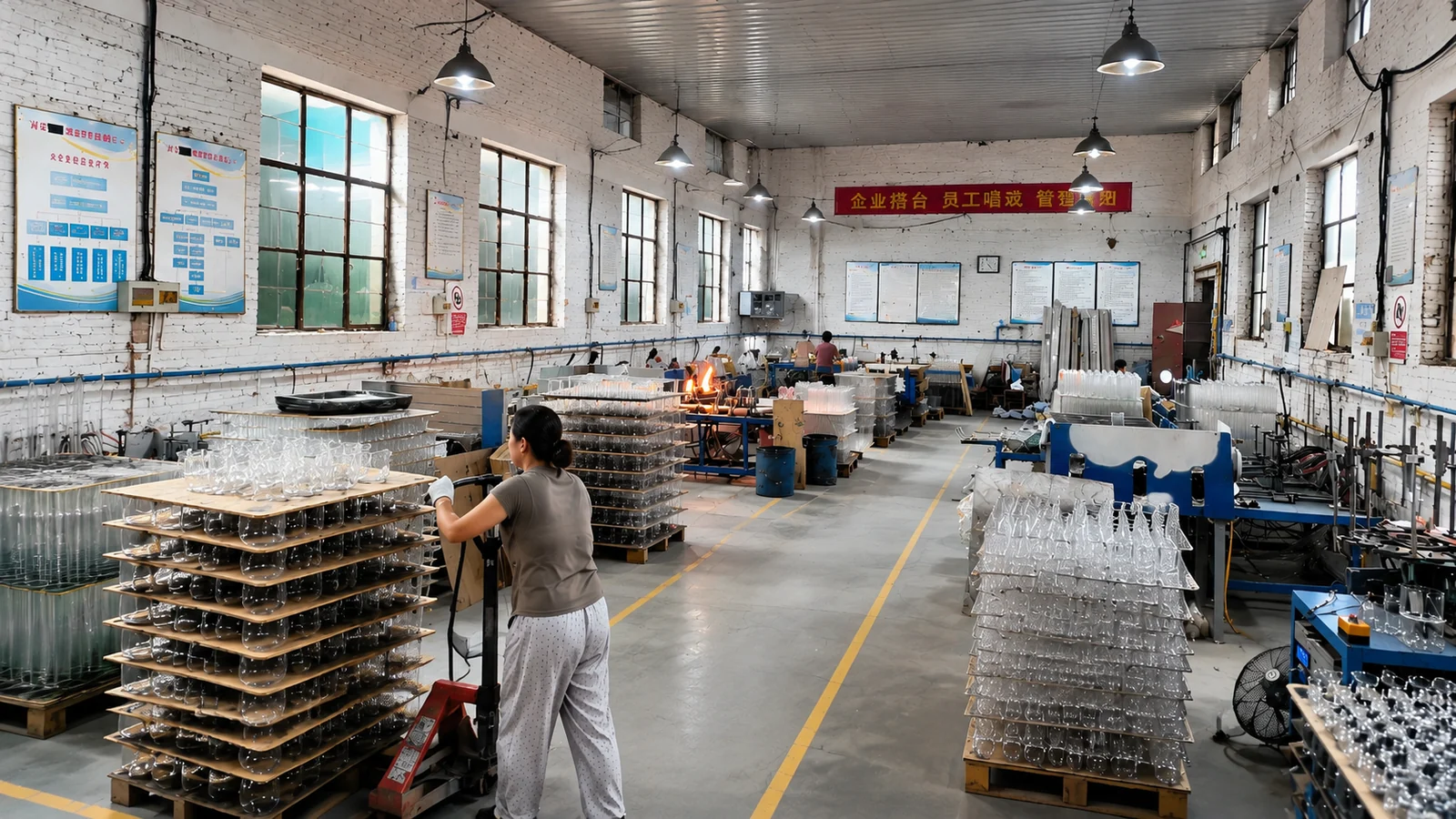
When a buyer asks us for glassware production time, the first useful question is not “How many days?” It is “From which confirmed event to which delivery point?” A date counted from the first inquiry is very different from a date counted from an approved sample, frozen artwork and paid packaging. A factory-ready order is also different from a goods-arrived date that includes inspection, booking and international transit.
Guangyi Glass coordinates development, sampling, packaging, quality checks and order follow-up with production partners. We confirm the responsible production site for each order before contracting. Because the route changes by product, we do not publish one fixed bulk-production promise for the whole catalogue. Instead, we build a schedule with named approval gates and show the assumptions that keep it valid.
The production clock starts at specification freeze
A project is ready for production only when the production team knows what to make. We call that point specification freeze. The record should identify the model, dimensions or capacity to follow, material route, quantity per finished SKU, decoration, components, pack and inspection requirements. Commercial conditions and the approval owner must also be clear.
If a buyer asks for a launch date while the logo, lid and box are still changing, we can work backward and identify decision deadlines, but we cannot honestly guarantee the bulk date. Every late revision should be reviewed for its effect on samples, purchased components, setup and packing. A small visual change can be large operationally if it changes a print screen, insert dimension or carton count.
We recommend documenting three dates:
- the buyer's requested arrival date;
- the latest safe shipment-handover date based on its logistics plan;
- the specification-freeze date needed to support that handover.
This makes the gap visible. It also prevents production time and ocean or air transit from being treated as one number.
Four project routes create different timelines
We first identify which route the order actually follows.
A current undecorated model has the fewest development decisions. The exact item, quantity and pack still need approval, and availability must be checked at the time of order.
A current model with logo or color adds artwork review, decoration feasibility, a decorated approval sample and production setup. A color target must be matched to a physical approval route; a screen color alone is not a reliable bulk reference.
A current body with custom components or printed packaging adds suppliers and dependencies. Lids, infusers, sleeves, inserts and boxes may have their own sample cycle, MOQ and production queue. The longest dependent item becomes part of the critical path.
A new shape or mold adds engineering review, drawing approval, tooling, trials and correction. We quote that route after the design is technically reviewed. A rendering is not enough to promise tooling success or a bulk date.
Buyers sometimes compare a current-model schedule from one supplier with a new-development schedule from another. Those dates describe different work. Our OEM glassware page helps buyers identify the route before asking for a deadline.
Sample time is one gate, not the entire schedule
Current-model sample preparation is commonly stated as 5–10 days in our verified product information after the sample model and conditions are agreed. That reference does not automatically cover logo decoration, custom color, new components, molds or a complete printed pack. Those require a project-specific estimate. Courier transit and the buyer's review period sit outside sample preparation.
We define what each sample must approve:
- a current sample verifies the existing physical item;
- a decorated sample verifies artwork position and visible result;
- a component sample verifies fit and use together;
- a packing sample verifies set assembly, insert and protection;
- a new-development sample verifies the latest drawing and trial outcome.
Approval should be written against the same checklist used for bulk QC. If feedback arrives as separate comments from brand, purchasing and logistics teams, the sample can cycle repeatedly. We ask the buyer to appoint one approval owner who consolidates those comments.
MOQ can change both setup and sequencing
MOQ is not only a price question. It reflects forming, decoration, color, component and packaging setup. Some verified current-model product pages show a 500–1,000-piece trial range for that specific SKU. We do not apply it to every model. New shapes, multiple colors or printed packs may require different minimums.
The quantity matrix also affects production time. One 3,000-piece clear SKU is not operationally equal to six 500-piece versions. Each version may require artwork control, changeover, component allocation, separate labels and separate QC records. When a launch includes too many variants for its total volume, we may suggest one core capacity, one decoration method and fewer pack versions for the first run.
This is not a guarantee of a lower MOQ or faster production. It is a way to ask the responsible production and component partners for a schedule based on a stable plan.
The critical path may sit outside glass forming
Buyers often assume the glass itself controls the entire lead time. In many projects, the longest open item is a printed box, colored component, decoration approval, third-party test or buyer-supplied file.
We map the dependencies rather than adding every task end to end. Work that can safely run in parallel is identified, while work that depends on approval remains sequential. For example, a plain current glass can be measured while artwork is prepared, but a final insert should not be approved against a component whose dimensions are still changing. Printed packaging should not be released before mandatory market text and barcode files are approved.
The production schedule normally considers:
- product and material confirmation;
- sample preparation and buyer approval;
- mold, decoration or color setup where required;
- glass and component readiness;
- bulk work and any secondary processing;
- finished-product and packing QC;
- rework or sorting if inspection finds an issue;
- forwarder booking and cargo handover.
We state which items are estimated, confirmed or still dependent. This gives the buyer a schedule it can manage rather than a single date with hidden conditions.
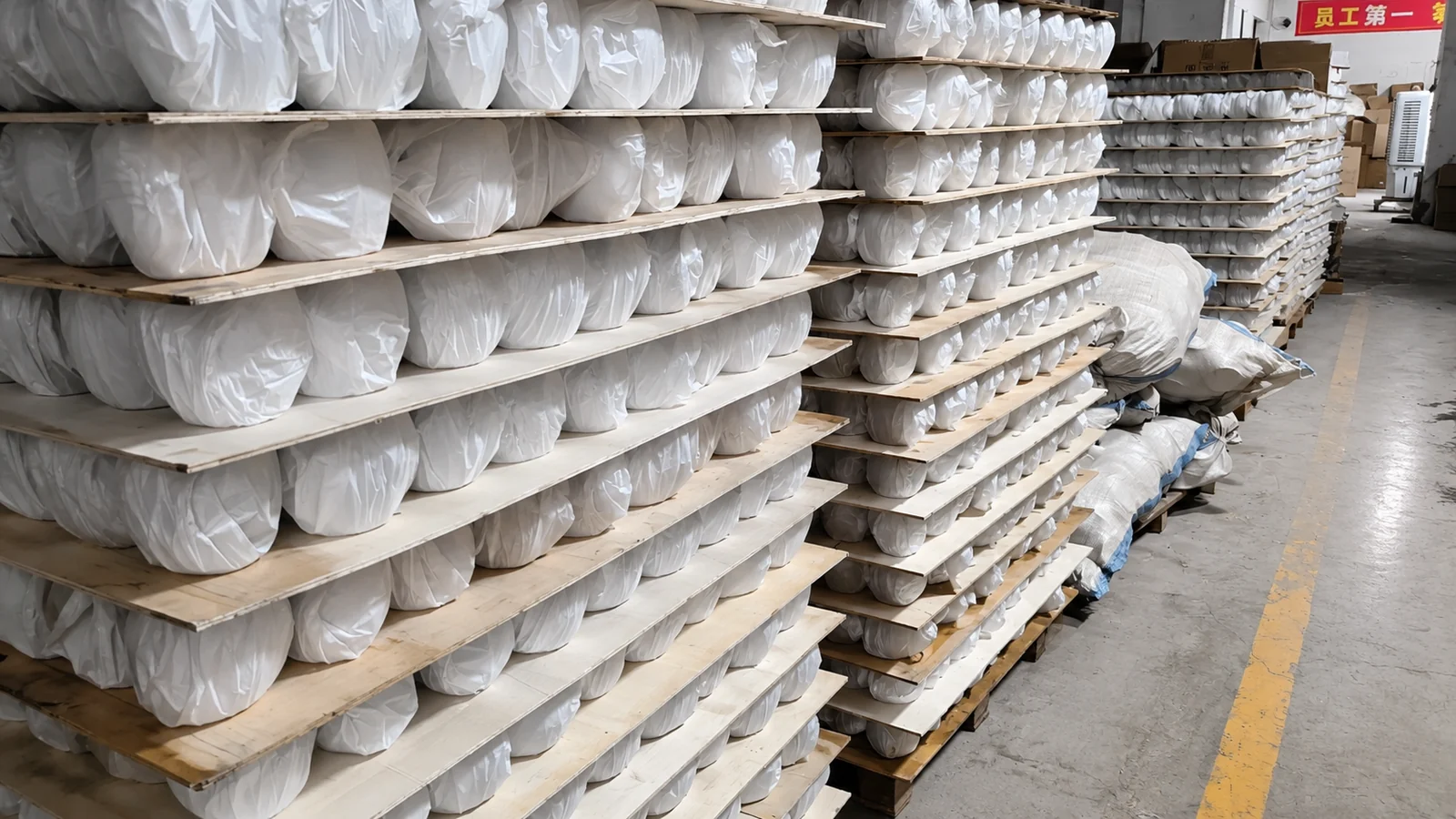
Packaging must be on the same timeline
Retail packaging is often approved after the glass, but it can delay shipment just as effectively. The pack needs the finished product dimensions, accessory set, decoration contact points, labeling files and carton quantity. A late addition such as a spoon or infuser can require a new insert and change the master carton.
We separate design approval from production approval. A flat artwork file may be approved visually, while the physical box and insert still need to fit and protect the item. When packaging is commercially important, we recommend a complete sample. Our export packaging page explains the protection questions to resolve before bulk assembly.
Carton dimensions also affect freight booking. Early estimates can support planning, but the final packed configuration should update volume, weight and loading assumptions. A freight cutoff cannot rescue an order whose pack is still unapproved.
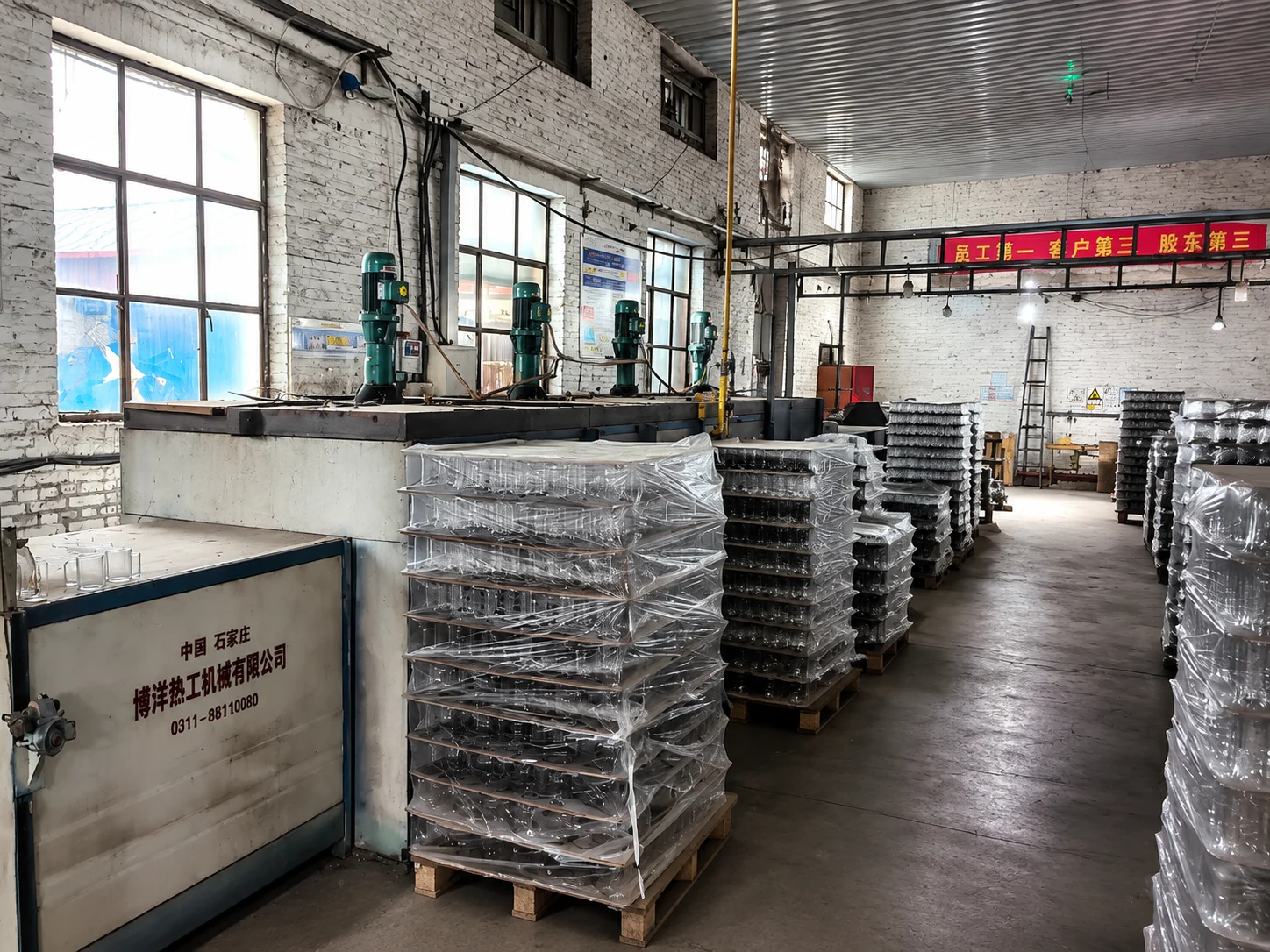
QC time should be planned, not squeezed out
An urgent schedule sometimes treats inspection as optional time at the end. We do the opposite: we define the QC points before production and reserve a release gate. Product identity, measurable criteria, visible appearance, decoration, component fit, set completeness and carton packing may all require checks.
The inspection scope depends on the product and buyer risk. A third-party inspection adds coordination and must be booked with a clear checklist. If a result requires sorting, rework or buyer disposition, that work needs time. We do not automatically move the shipment date forward by skipping agreed QC.
Our glassware quality-control page describes how we separate function, appearance and pack. Buyers should also define who can approve an exception. Waiting for several departments after inspection can consume more time than the physical check.
Build backward from the commercial date
For a product launch, store opening or promotional event, we work backward from the date the goods must be available—not merely the sailing date. The buyer or forwarder should advise expected transit, clearance, receiving and contingency. Freight schedules and border processing can change, so we do not present a factory timeline as an arrival guarantee.
We then assign target dates for cargo handover, final inspection, pack completion, bulk completion, component readiness, sample approval and artwork freeze. Each target has an owner. If one gate moves, we update the effect instead of keeping an obsolete final date on the order sheet.
Reasonable contingency depends on the consequence of delay and the novelty of the product. A first new-mold gift set for a fixed event deserves more decision and logistics buffer than a repeat order of an unchanged current SKU. Buffer should not hide an undefined specification; it should protect a clear plan from normal variation.
How buyers can keep the schedule moving
The fastest useful action is often a complete decision, not a request for more production pressure. Buyers can help by using one SKU matrix, appointing an approval owner, sending editable artwork, confirming destination requirements early and reviewing samples against a checklist. They should tell us immediately if the launch date, quantity or packaging route changes.
We provide status in terms of completed gates and open dependencies. “In production” is too broad. “Decorated sample approved; box insert awaiting revised lid dimension” tells both sides what must happen next.
Buyer FAQ
How long does bulk glassware production take?
It depends on the selected model, quantity, forming route, decoration, components, packaging, production-partner queue and QC scope. We quote a project-specific lead time after the specification and approval route are clear rather than publishing one unsupported number.
When does the quoted lead time start?
The quotation should state its start condition. We normally build the schedule from specification freeze, required sample approval and agreed commercial conditions. The first inquiry date is not a reliable production start.
How long does a current-model sample take?
Verified product information commonly states 5–10 days after the sample scope is agreed. Decorated, custom-component, new-mold and complete-pack samples require separate review. Courier and buyer approval time are additional.
Does a larger MOQ always take longer?
Not necessarily. Quantity matters, but SKU fragmentation, setup, components and packaging can have greater schedule impact. One larger stable SKU may be easier to control than many small color and artwork versions.
Can packaging be produced while the glass is being made?
Some work may run in parallel after dimensions, components and artwork are stable. Final inserts and printed files should not be released against changing inputs. We map dependencies before deciding what can safely overlap.
Can production be rushed for an event date?
We can review the critical path and available production route, but we do not promise an accelerated date before confirming product, approvals, partner capacity, QC and logistics. Reducing unnecessary variants may help; skipping required approval or inspection creates a different risk.
Is shipping time included in production time?
No, unless a quotation explicitly defines a combined service. Sample courier, inspection, freight booking, international transit, customs clearance and destination delivery should be shown separately.
Ask for a schedule with assumptions
Send us the product reference, quantity per finished SKU, decoration, component list, packaging requirement, destination and required arrival window. We will show the likely route, approval gates and open inputs before confirming a bulk schedule.
Browse current products, review the glass cup manufacturing process, or ask us to build your project timeline. We will explain what can be scheduled now and what still needs evidence or approval.