
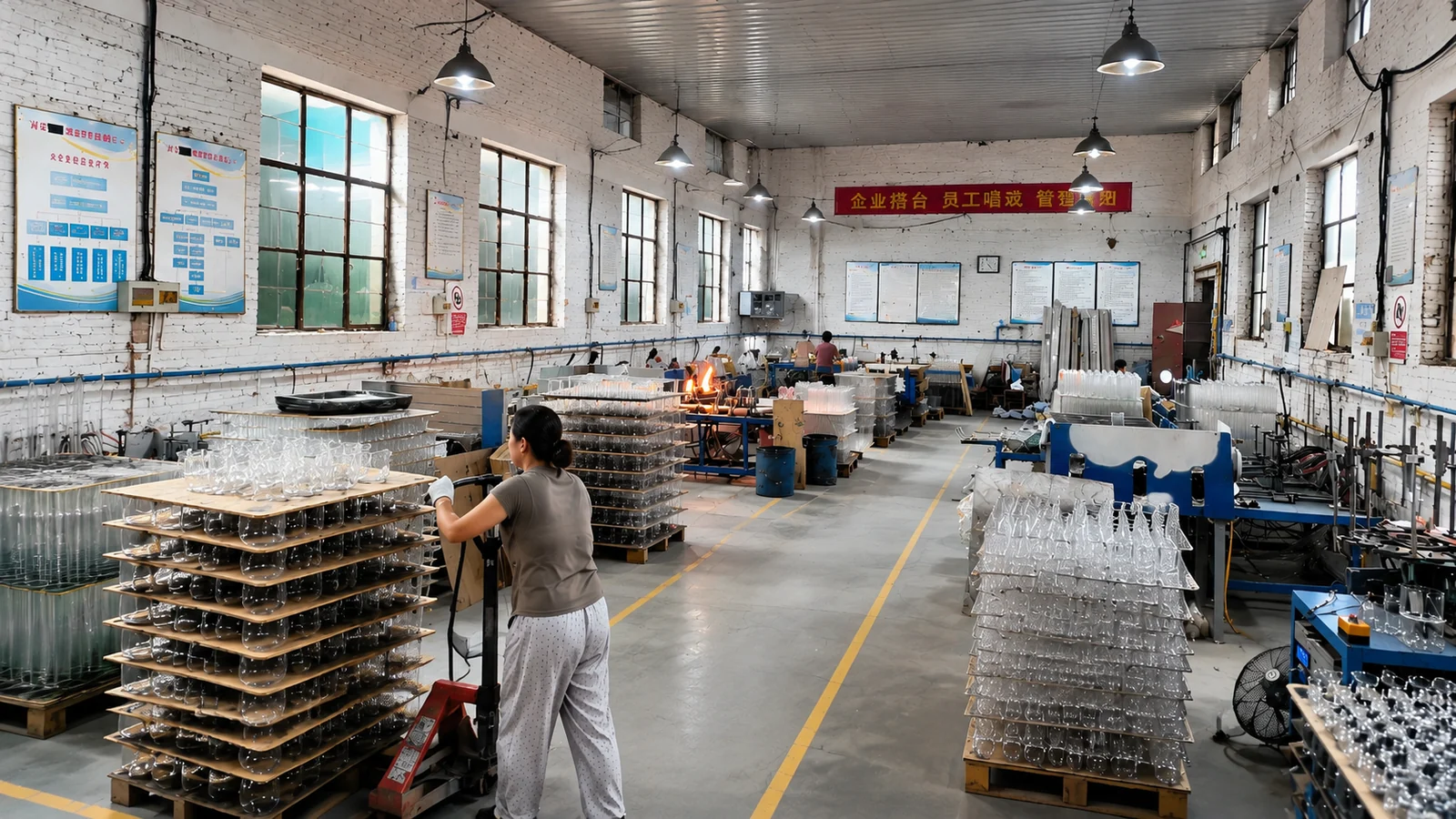
The difficult part of importing glassware from China is rarely finding photographs of cups, pitchers or jars. The difficult part is turning one photograph into a contractable finished SKU: a specific product, an approved sample, a defined quality level, protective packing, correct documents and a clear handover point. Buyers who compare only the first unit price often discover the missing decisions after artwork, packaging or freight has already been paid for.
We help overseas buyers organize those decisions. Guangyi Glass coordinates product development, sampling, packaging, quality checks and order follow-up with production partners. We confirm the responsible production site and manufacturer for each order before contracting. This matters because buyers should know who is responsible for the goods instead of assuming that every catalogue page represents one building, one line or one manufacturing route.
Start with the importer's finished-product brief
Before we quote, we ask what the buyer will actually import and sell. “500 ml glass cup” is not yet a complete specification. We need the model or drawing, intended fill, material route, dimensions or capacity to verify, decoration, accessory list, retail pack and order quantity for each version. We also ask whether the glass will be used in hospitality, retail, e-commerce, food service or as a promotional gift, because use and handling change the relevant questions.
Destination is equally important. A buyer should ask its customs broker, test laboratory or market specialist which labeling, food-contact, packaging, product-claim and import-document requirements apply. We can supply agreed product information and arrange project-specific evidence, but we do not tell a buyer that one certificate or generic report makes every model compliant in every country. Decoration, coating, lid material and intended use may change what must be reviewed.
A useful brief includes:
- exact product link, drawing or physical reference;
- intended use and target market;
- quantity by size, color, logo and packaging version;
- measurable specifications and appearance priorities;
- required test, inspection or document evidence;
- destination, Incoterm and requested arrival window.
Our RFQ guide provides a fuller checklist. Sending these inputs does not lock the buyer into a design. It lets us separate what is already available from what requires sampling or development.
Verify what the sample proves
Import projects go wrong when a sample is treated as a general promise. A current undecorated sample can prove the physical model received: dimensions, capacity, rim, base, hand feel and component fit. It does not approve a logo that has not been applied, a box that has not been made or a performance claim that has not been tested under the required method.
We agree on the sample stage before arranging it. Current-model sample preparation is commonly listed as 5–10 days in our verified product information after details are confirmed. Decorated samples, color work, custom accessories, new molds and complete packing samples receive a separate schedule after review. Courier transit and buyer approval time are separate from preparation.
We ask the buyer to comment against a checklist rather than write only “approved.” Capacity, dimensions, decoration position, visible color, lid or infuser fit, set completeness and pack direction can each be accepted or revised. The approved sample and written specification then become the bulk reference. This is especially important when a reference image came from another brand or marketplace; we will not promise an exact copy without checking feasibility, rights and measurable details.
MOQ belongs to the production route, not the country
There is no single MOQ for importing glassware from China. A current clear model, a current model with one logo, a sprayed Pantone color, several mixed capacities, custom packaging and a new mold all create different setups. Accessories and printed boxes may have supplier minimums that do not match the glass-forming quantity.
Some Guangyi Glass product pages state a current-model trial range—often 500–1,000 pieces for the specific SKU where that information has been verified. That is not a site-wide promise. We confirm MOQ after checking model, decoration, color, components and packing. For a first order, we often look for a focused route: one body, fewer artwork versions, an existing color or simpler packaging. The goal is not to force every project into a low MOQ. It is to prevent an order quantity from being divided into so many versions that production and QC become unstable.
Ask for the MOQ per finished SKU, not only the total purchase quantity. If 2,000 pieces are divided across four colors and two box designs, the operational setup is different from one 2,000-piece SKU.
Compare quotations on the same basis
Two “FOB prices” can still describe different products. One may cover an undecorated glass in a bulk carton; another may include a logo, lid, printed box, divider, inspection and replacement allowance. We build the quotation around a named model and state what is included.
For a useful comparison, check:
- glass specification and approved reference;
- decoration method and artwork scope;
- accessories and set assembly;
- unit pack, master carton and marks;
- inspection scope and any third-party service;
- sample, mold or tooling charges;
- Incoterm and named handover point;
- validity and assumptions behind freight.
The lowest unit price may create a higher landed cost if carton volume, breakage risk, rework, destination handling or missing components are ignored. We recommend calculating the complete sellable unit at the buyer's warehouse, not stopping at the factory or port price.
Treat compliance as a responsibility map
Buyers sometimes ask, “Do you have the certificate?” before identifying the exact product and market. We turn that question into a responsibility map. The importer confirms destination rules and the evidence its sales channel requires. We confirm the product configuration and what existing documents actually cover. If additional testing is needed, the parties agree on the sample, laboratory, standard, cost and timing before bulk release.
Claims such as heat resistance, dishwasher use or food contact should be tied to the exact material, component and test basis. A report for clear undecorated glass may not cover a new coating, printed rim or silicone accessory. We would rather mark a claim as open than place unsupported language on packaging.
The same principle applies to product origin, carton marks, barcodes and language. The buyer should supply or approve market-facing files. We check that the production version matches the approved file, but legal review for the target market remains with the responsible importer unless a contract assigns otherwise.
Build QC around buyer risk
“No defects” is not a workable inspection standard for mass-produced glassware. We define critical function, measurable specification, visible appearance, decoration and packing requirements. Acceptance criteria should reflect the product route: handmade variation, machine-made consistency and decorated surfaces have different realistic limits.
Our QC plan can include incoming component checks, in-process observations, finished-product checks and pre-shipment packing verification. We record model, quantity, set completeness, logo version, component fit, carton count and agreed appearance points. If the buyer appoints a third-party inspector, we align the inspection checklist and release rule before the visit. Our quality-control page explains this structure.
An importer should also decide how exceptions are handled. Will affected pieces be sorted, replaced, credited or accepted within an agreed limit? That decision belongs in the commercial plan, not in an urgent conversation after cargo is ready.
Plan packing for the real route
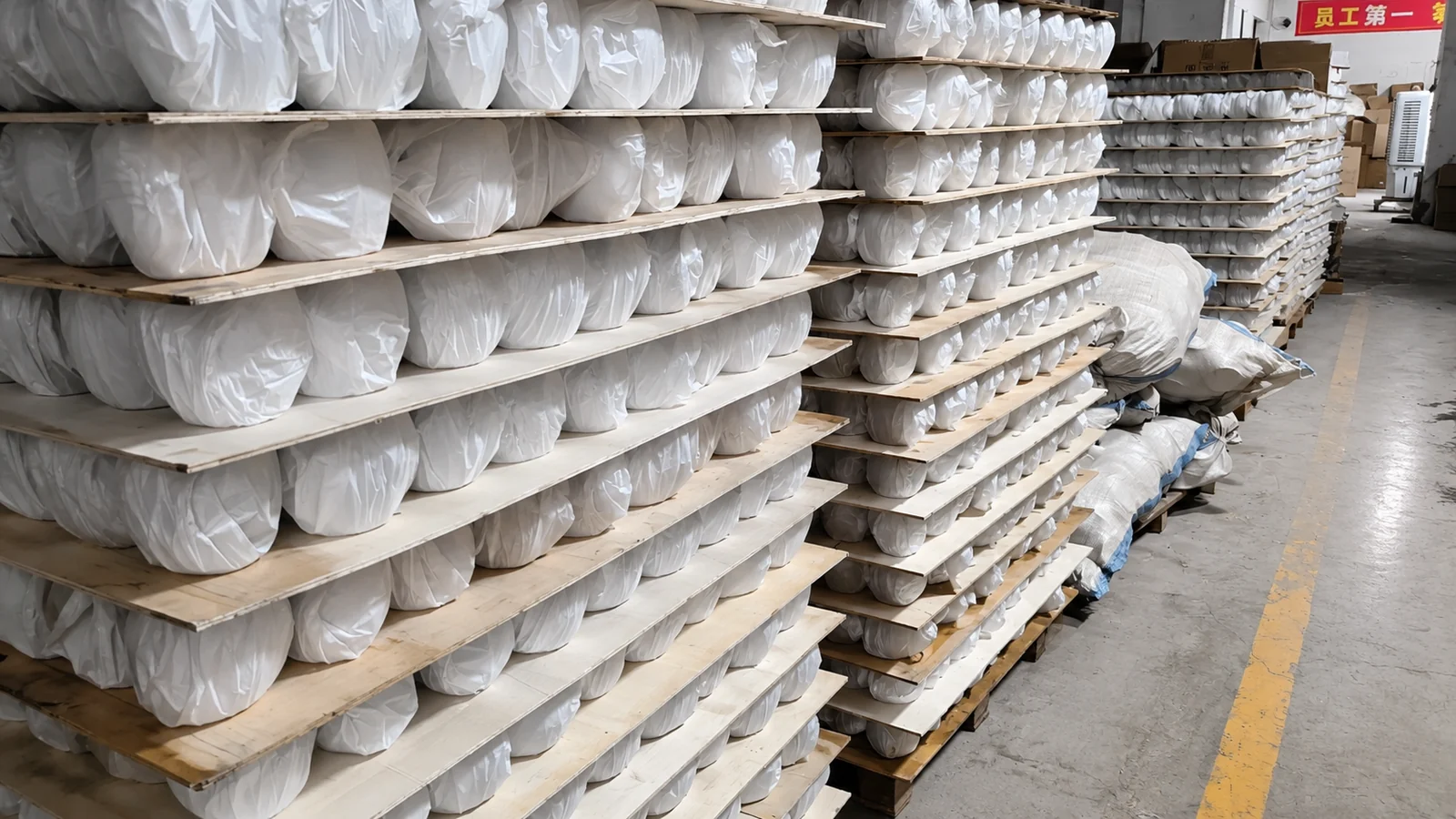
Glassware packing must survive the route from assembly to the buyer's receiving point. Retail presentation and export protection are separate layers. A beautiful color box may still need an insert, dividers and a stronger outer carton. Parcel delivery may need a different validation route from palletized wholesale distribution.
We review glass-to-glass contact, rim and handle exposure, accessory movement, carton count, gross weight and carton marks. For gift sets, the full pack should be sampled after the actual components are confirmed. For mixed-SKU shipments, the carton identity must help the warehouse receive without opening every box. See our export packaging approach before finalizing box artwork.
Packed carton dimensions drive freight planning. Early estimates based only on product dimensions can be misleading, so booking should be updated from the approved pack. Freight cost and transit schedules remain route- and date-dependent.
Keep production time separate from transit time
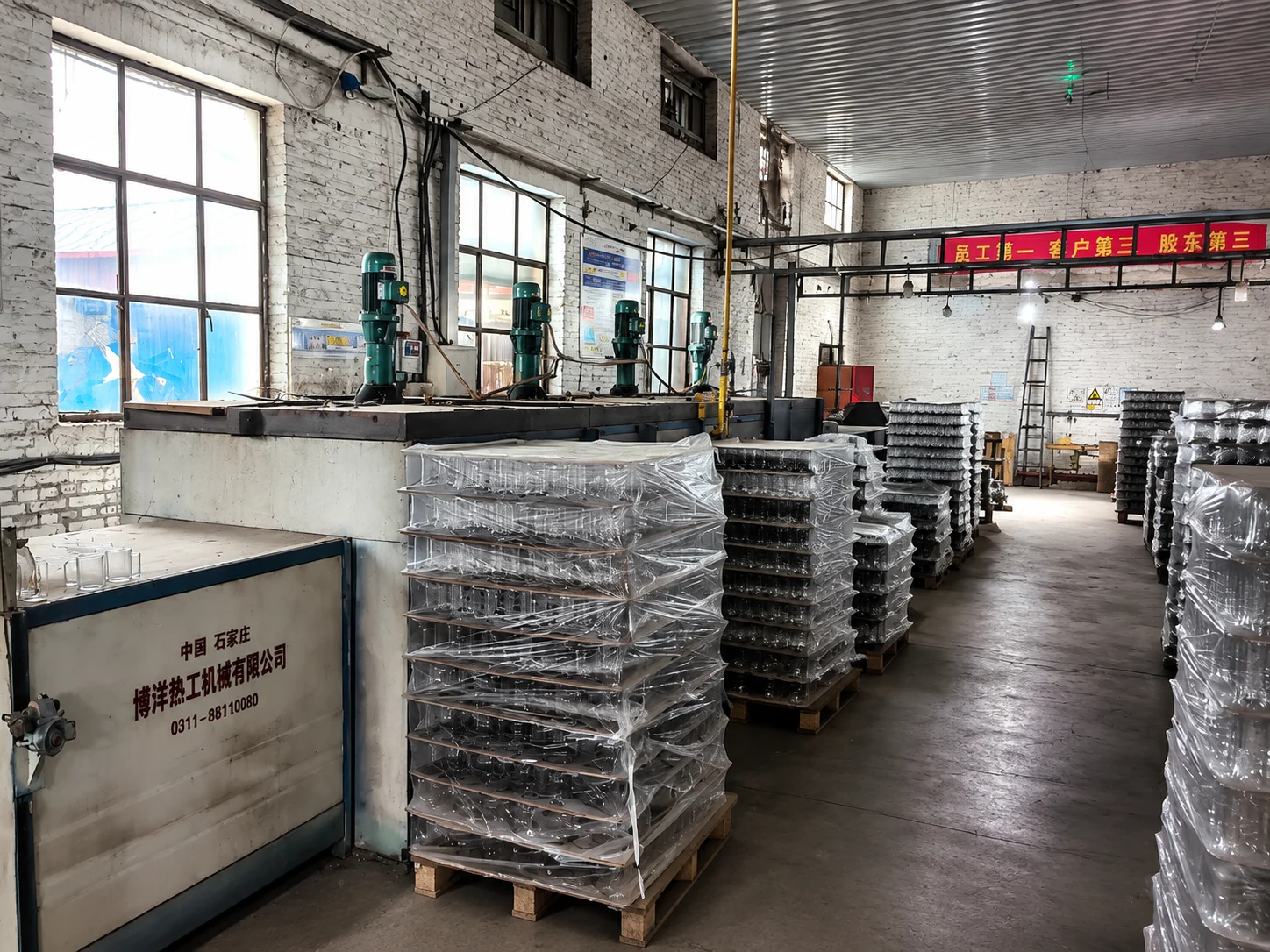
We do not publish one fixed bulk-production number for every project. A current undecorated item, logo decoration, printed packaging, a custom component and a new mold have different critical paths. The clock should start from specification freeze, sample approval and agreed commercial conditions—not from the first inquiry.
We divide the plan into development, approvals, material and component readiness, bulk production, decoration, packing, inspection, booking and international transit. Buyer artwork approval or destination testing can sit on the critical path. Our glassware production-time guide shows how to build a schedule without hiding these dependencies.
Choose an Incoterm with your logistics plan
EXW, FOB and DDP allocate work, cost and risk differently. The named place or port matters. Buyers should confirm duties, taxes, import clearance, insurance, destination charges and delivery access with a forwarder or broker. We state the service included in our quote and use final carton data to update freight where logistics are included.
For a buyer-nominated forwarder, we request the origin contact, cargo deadline and document instructions early. For a consolidated shipment, the receiving warehouse may also set pallet, label or appointment rules. These are not “after production” details; they influence packing and release.
A safer first-order route
For first-time importers, a focused order gives everyone a clearer approval and receiving record. Start with a proven current body where possible, limit color and artwork versions, approve a physical sample, validate the actual pack and document every open claim. Add range extensions after the first SKU has real sales and handling feedback.
This route cannot remove all commercial risk, but it makes the risk visible. The buyer knows which facts are confirmed, which are sample-dependent and which require destination advice.
Buyer FAQ
Is Guangyi Glass the manufacturer of every product shown?
No blanket claim should be assumed. We coordinate with production partners and confirm the responsible production site and manufacturer for each order before contracting. We tell buyers which route applies to the selected product.
What MOQ should I expect when importing glassware from China?
MOQ depends on the model, forming route, decoration, color, accessory and packaging. Some verified current models show a 500–1,000-piece trial range, but each SKU must be checked rather than applying that figure to the whole catalogue.
How long does a sample take?
Current-model sample preparation is commonly 5–10 days after the sample scope is agreed. Decoration, custom components, molds and printed packaging require a separate estimate. Courier delivery and approval time are additional.
Who confirms product compliance in the destination market?
The importer should confirm applicable rules with its broker, laboratory or legal specialist. We provide agreed product information and arrange evidence or testing for the exact configuration, but we do not claim universal compliance from a generic document.
Can I use my own inspection company?
Yes. Agree on the checklist, sampling method, access, timing, cost and shipment-release rule before the goods are complete. That keeps inspection from becoming an undefined last-minute step.
Which Incoterm is best for a first import?
There is no universal best term. Choose after comparing who will handle origin transport, export, main freight, insurance, import clearance, duties and final delivery. The quotation should name the exact place and included services.
What information produces the most accurate quote?
Send the product reference, intended use, destination, quantity per finished SKU, logo or color files, accessory list, packaging requirement, required evidence and preferred Incoterm. A target arrival window also helps us expose schedule dependencies.
Send us a complete import brief
Guangyi Glass works with brands, wholesalers, hospitality buyers and distributors on current glassware models and OEM development. We will tell you what can be confirmed from existing information, what requires a sample and which questions belong with your destination adviser.
Browse the product range, read about OEM glassware coordination, or send your import RFQ. A clear product-and-market brief lets us return a quote that is useful beyond the unit price.