
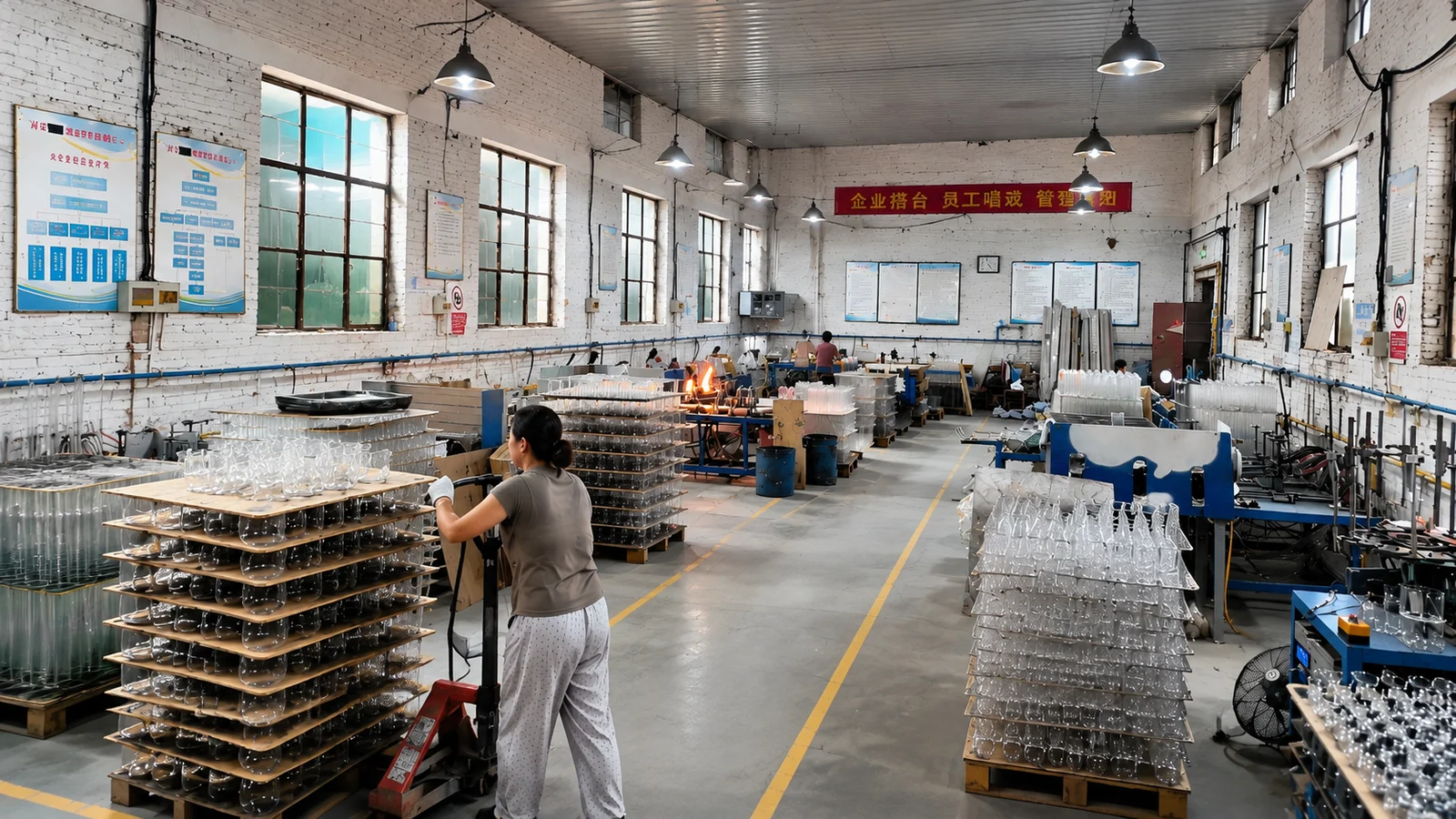
An overseas shipment is not ready just because the glasses are finished. In our work with importers, distributors and brand customers, the last stage is where product identity, protective packing, carton data, inspection records and freight instructions must meet. If one of those pieces is still open, a completed order can wait in a warehouse or reach the destination with avoidable confusion.
At Guangyi Glass, we coordinate development, sampling, packing, quality checks and order follow-up with production partners. The responsible production site is confirmed for each order before contracting. Our shipping process therefore starts with a written product and packing specification, not with a booking request. We want the forwarder to collect the same order that the buyer approved, down to the SKU count, decoration version, accessory set and carton mark.
Shipping readiness begins before bulk packing
The best time to solve a shipment problem is before the retail box and master carton are ordered. We ask for the destination, sales channel, expected handling route and Incoterm while the product is still being sampled. A wholesale carton for a local distributor, a shelf-ready gift box and a parcel-delivery pack do different jobs. They may use the same glass but require different inner protection, carton counts and labels.
We build a finished-SKU matrix with the buyer. Each row identifies the model, capacity, color, decoration, accessory, retail pack, quantity and destination. This prevents a common mistake: approving one physical glass and assuming that every color, lid or gift-set combination is covered by that approval. If a variant changes the contact points inside the insert or changes the carton weight, we review it separately.
MOQ also affects this matrix. A current-model trial order may have a lower setup requirement than a new shape, several Pantone colors or a printed gift box. Some current product pages list a verified trial-order range for that particular SKU, but we do not transfer one product's MOQ to another. Glass forming, decoration, accessory purchasing and printed packaging can each have a different minimum. We confirm the feasible quantity per finished version before the buyer commits to carton artwork or freight space.
We freeze the pack specification before release
Our pack specification is more than a box drawing. It records how the glass is separated, which surfaces can touch, how components are secured and how many finished units belong in each level of packing. For a set, we confirm that every cup, lid, infuser, spoon or other approved component has an assigned position. For decorated glassware, we check that inserts and dividers do not rub the printed area during normal handling.
The specification normally covers:
- unit identity and any protective sleeve or bag;
- divider, tray, molded insert or other inner support;
- retail-box count and orientation;
- master-carton quantity, dimensions and expected gross weight;
- carton material, closure and handling marks;
- pallet or floor-loading instruction when required;
- label, barcode and country-marking files supplied or approved by the buyer.
We distinguish presentation from transport protection. A rigid gift box can look excellent when opened but still allow movement inside a master carton. An e-commerce order may need protection for repeated parcel handling that a palletized wholesale order does not. We review the route and can prepare a packing sample when the pack itself is a critical commercial feature. Our export packaging page explains the questions we use before selecting a pack.
The approved sample remains the release reference
Before production, we agree on what the approval sample proves. A plain current sample can confirm dimensions, capacity, rim, base and component fit. A decorated sample is needed to approve artwork position, visible color and the way a decoration sits on a curved surface. A complete packing sample checks assembly order, insert fit and the recipient's opening experience.
For current models, sample lead time is commonly stated as 5–10 days on our verified product information, once the exact model and sample conditions are agreed. A decorated sample, custom component, new mold or complete printed pack requires a separate schedule after feasibility review. Courier transit is not included in the preparation time. We state these boundaries because “sample in one week” is not useful if one party means a plain stock item and the other expects a finished gift set.
The bulk release record points back to the approved sample, signed specification or both. If the buyer changes the logo, color, component or box after approval, we assess whether a new sample or only a documented revision is needed. We do not hide that change inside the original lead time.
Our pre-shipment QC has three separate questions
One inspection sentence such as “quality checked” is too vague for a glassware order. We separate product, presentation and packing checks.
First, product checks cover identity and agreed measurable points: model, dimensions or capacity tolerance where specified, visible finish, rim and base condition, component fit and quantity. The acceptance criteria must match the manufacturing route and the approved reference. Handmade, machine-made and decorated products do not share one universal visual tolerance.
Second, presentation checks cover logo placement, artwork version, color reference, label position and set completeness. A box with the correct product but the wrong market label is not ready to ship.
Third, packing checks cover carton count, internal separation, closure, marks and packed measurements. We verify samples from the finished packing process rather than assuming the theoretical box drawing matches production. The final inspection scope, sampling level and any third-party inspection requirement are agreed with the buyer before the order is complete. Buyers can review our broader glassware quality-control approach.
Carton data should come from finished packing
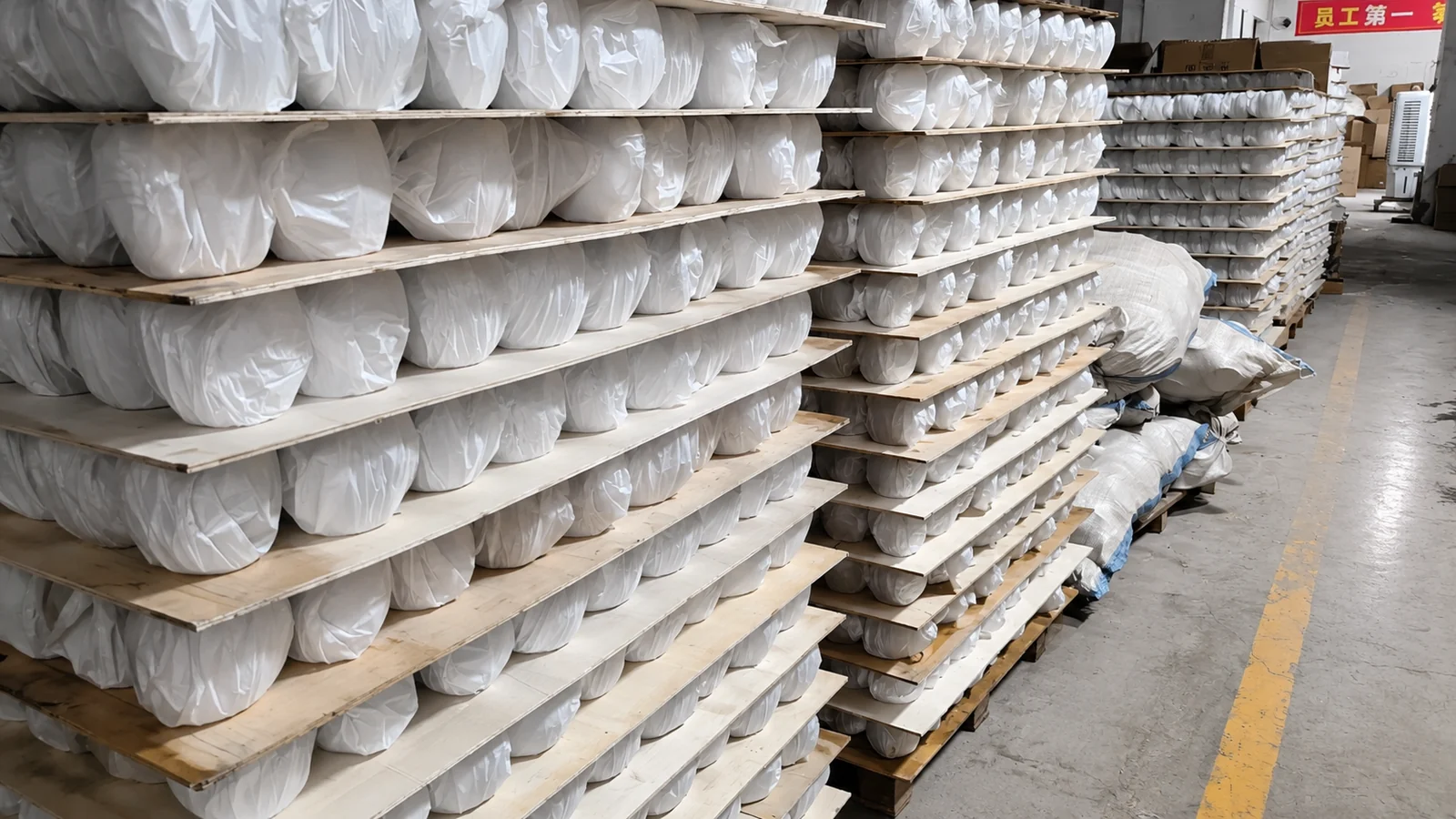
Freight estimates often fail when they are based on a glass dimension or an early box concept. We issue carton dimensions, carton count, gross and net weight from the approved packing configuration. If the retail pack or carton count changes, the shipment volume changes too.
We send the buyer or nominated forwarder a packing list draft early enough to review the booking basis. That draft shows finished SKUs, units per carton and total cartons. We then reconcile it against packed quantities before handover. For mixed-SKU orders, carton marks must make receiving practical: the consignee should not have to open every carton to identify size or artwork.
Loading method matters as well. Floor-loaded cartons, pallets and consolidated cargo have different space and handling implications. We do not promise a container utilization figure until the finished carton data and loading constraints are known. If the buyer's forwarder sets pallet height, wood-treatment or warehouse-label requirements, those must enter the pack specification before final assembly.
Documents follow the commercial agreement
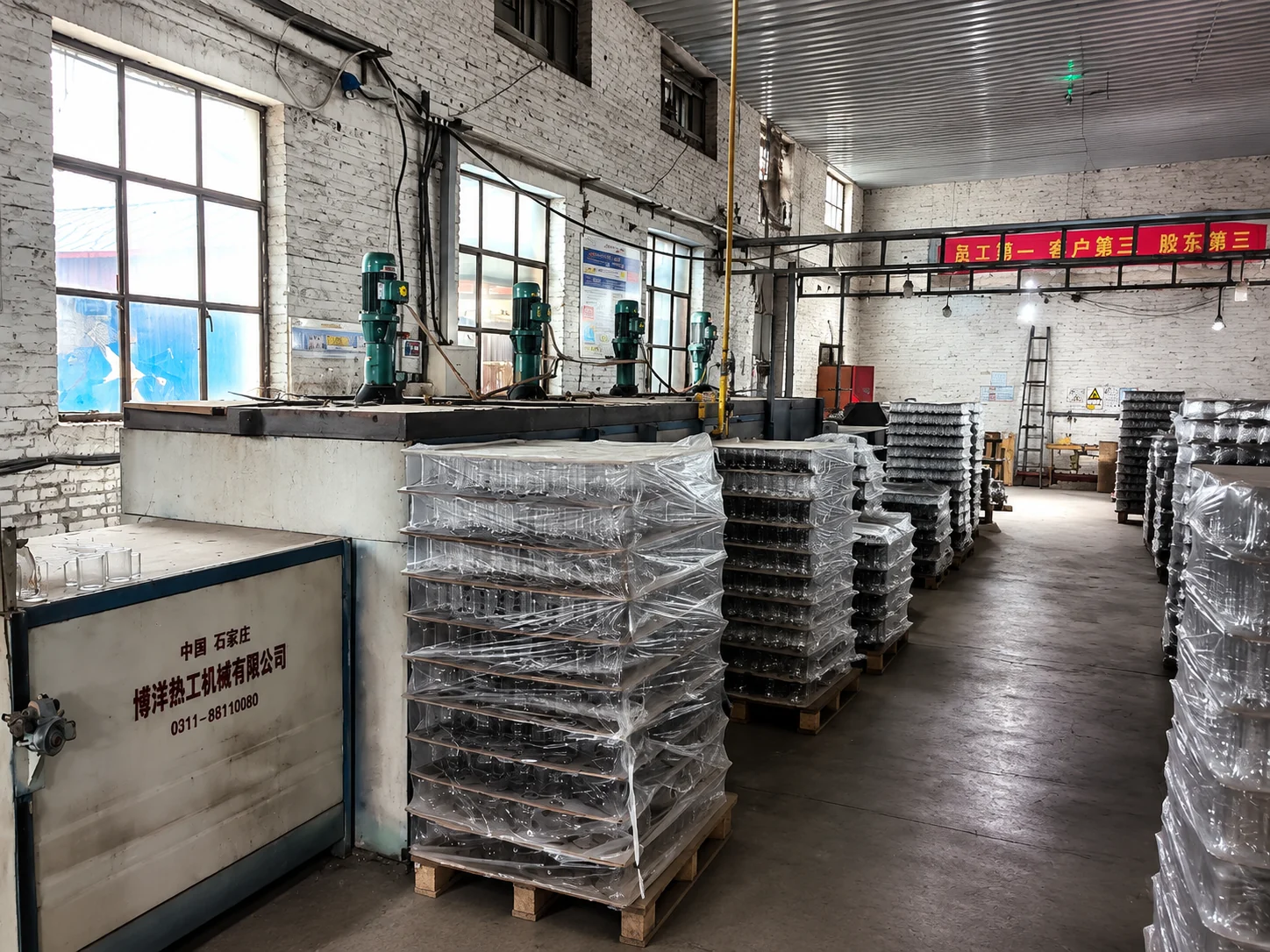
The shipment document set depends on destination, product, Incoterm and the buyer's customs instructions. A typical commercial set may include a commercial invoice and packing list, while transport documents are issued through the carrier or forwarder. Other documents, declarations or test reports are project-specific. We do not claim that one certificate covers every glass model, decoration or country.
We ask the importer or customs broker to confirm destination requirements. Our role is to supply accurate product and shipment information and arrange agreed supporting documents. The buyer remains responsible for confirming what its market, sales channel and customs process require unless the contract assigns a specific task differently.
Names, addresses, product descriptions, quantities, values, weights and marks must be consistent across the approved commercial files. A small naming difference can create a large receiving delay. We circulate drafts for approval rather than waiting until cargo collection to discover a consignee or description change.
Incoterms define handover, not product readiness
EXW, FOB and DDP are not interchangeable price labels. They allocate costs, tasks and risk at different points. We confirm the named place or port and the service included in the quotation. The buyer should also confirm insurance, import clearance, duties and delivery access with its logistics provider.
Whatever the term, our product-release work remains the same: the goods must match the approved order, the packing data must be accurate and the handover record must identify what was collected. For buyer-nominated forwarders, we request the booking contact and cargo-ready deadline early. For routes quoted through our logistics contacts, freight remains subject to the final packed volume, route and booking date.
A practical release sequence
We manage the final stage through clear gates rather than one promised “shipping date”:
- Specification freeze: finished SKU, artwork, accessories and pack are approved.
- Packing verification: production packing follows the approved construction and carton count.
- Final QC: agreed product, decoration, quantity and pack checks are completed.
- Release record: open issues are closed or documented with the buyer's decision.
- Document reconciliation: invoice and packing-list data match the finished order.
- Forwarder handover: booking reference, pickup details and cargo information are confirmed.
Bulk production timing is quoted after these inputs are clear; we do not publish one fixed number for all products. A current undecorated model, a multi-color decorated range and a new-mold gift set have different critical paths. The buyer's approval time, printed packaging, inspection booking and freight cutoff can be as important as production. Our production-time guide shows how we build that schedule.
What we need to review a shipping plan
Send us the product link or reference, quantity per SKU, decoration files, accessory list, retail-pack requirement, destination, preferred Incoterm and requested arrival window. If a forwarder is already appointed, include its origin-contact requirements. If the order will go to multiple warehouses, show the allocation before carton labels are finalized.
We will return the open points that affect sample route, MOQ, packing, inspection, carton data and handover. This gives the buyer a usable shipping plan instead of a freight estimate built on an unfinished product.
Buyer FAQ
When is a glassware order ready for overseas shipping?
It is ready after the finished SKU and pack match the approved reference, agreed QC is complete, quantities are reconciled, shipment data is confirmed and the buyer or forwarder has accepted the handover details. Finished production alone is not enough.
Can you confirm freight cost before packaging is approved?
We can discuss a preliminary range, but a reliable quote needs finished carton dimensions, weights, carton count, route, Incoterm and booking timing. A packaging change can alter both cost and loading method.
What is the MOQ for an export glassware order?
MOQ is confirmed per model, decoration, color and pack. A current model may support a trial route, while new molds, custom colors and printed packaging add separate setup minimums. We review the full SKU matrix before confirming it.
How long does a glassware sample take?
Verified current-model information commonly states 5–10 days after sample details are agreed. Decoration, new components, molds or complete packaging require a project-specific schedule, and courier transit is separate.
Can a gift box be used as the shipping carton?
Usually the presentation box and transport pack should be evaluated separately. Whether a retail box needs an outer carton, dividers or additional support depends on the glass, set layout and handling route.
Do you provide all documents required for import?
We provide the commercial and supporting documents agreed for the order. The exact destination requirements must be confirmed by the importer or customs broker because they vary by market, product use and shipment route.
Can a buyer arrange third-party inspection?
Yes, when it is agreed in the order plan. The inspection standard, timing, access, cost and release procedure should be confirmed before production finishes so the booking does not become a last-minute delay.
Start with the finished SKU, not the freight quote
Guangyi Glass works with overseas buyers on glass cups, pitchers, teapots, jars, accessories and export packaging. We coordinate with the responsible production partner for each order and keep approvals tied to the actual SKU.
Explore our product range, review our glassware export packaging guide, or send us your shipping-plan RFQ. Include the destination and packing route, and we will identify what can be quoted now and what must be confirmed before cargo release.