
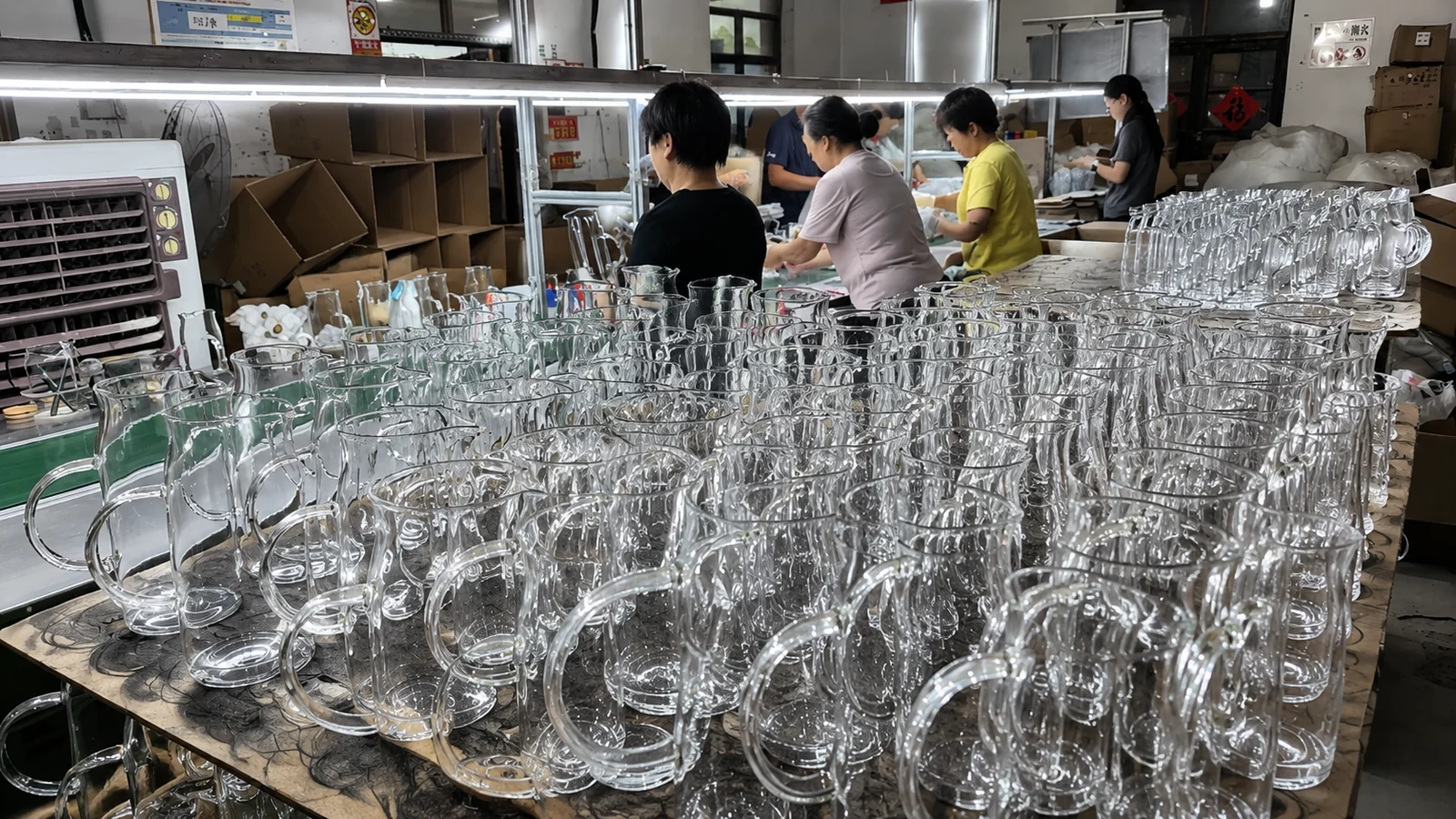
“Please check the quality before shipment” sounds clear, but it does not tell an inspector what to measure, which appearance reference to use, how many cartons are ready or what result allows release. We have seen quality discussions become difficult when the buyer and supplier both use the word “defect” for different things.
Our team coordinates inspection with the selected production partner and, where requested, the buyer’s third-party inspection company. The inspection plan belongs to the approved product. A tumbler, a handled mug, a double-wall cup, a pitcher with a lid and a storage jar with a seal do not share one identical checklist.
Inspection begins when the specification is written
Quality cannot be added at the shipping door. Before bulk authorization, we ask the buyer to approve the model or drawing, intended use, dimensions or capacity method, material and finish direction, decoration, components, packing and visible appearance reference. The QC checklist is built from that file.
We mark which characteristics are:
- critical to safe or intended use;
- important to function or saleability;
- controlled appearance points;
- identifiers such as model, logo version and carton code;
- buyer-specific tests or documents.
Words such as “perfect,” “premium” and “restaurant grade” are not observable limits. If bubble size, logo position, capacity, lid fit or color difference matters, the method and acceptance reference should be stated. We do not invent a numeric tolerance when the buyer and production route have not approved one.
The approved references must agree
An inspection can fail before a carton is opened if the inspector has conflicting files. We check that the purchase order, specification, approved sample identity, artwork, component list, packing instruction and carton marks point to the same SKU and version.
A physical sample may show hand feel and appearance better than a drawing. A drawing may state dimensions more clearly. An artwork file controls logo geometry. A color standard may be separate. No single reference answers every question, so the inspection brief states which document controls each characteristic.
If a buyer approves a change after the sample, the change must appear in the written file. Asking an inspector to remember a late chat message is not a reliable control method.
We confirm lot status before selecting samples
The inspection timing matters. A final inspection should represent the finished order at the agreed completion stage. We verify which quantities are produced, decorated and packed; how many cartons belong to each SKU; and whether any material is held for sorting or rework.
The lot should be identifiable. If finished goods from different production dates, logos or capacities are mixed without labels, a sample cannot reliably represent the order. Carton and pallet marks help the inspector distribute selections across the relevant lot rather than taking the easiest pieces from one open box.
For an in-process check, the purpose is different. The team may examine a startup condition, repeated variation or decoration alignment before the full quantity is complete. The report should label it as an in-process result, not silently treat it as final shipment approval.
Sampling method belongs in the order
Some buyers specify an AQL-based sampling plan or provide their own inspection standard. Others ask for a defined quantity or 100% review of a particular critical feature. We follow the agreed instruction and record the method used. We do not claim that one AQL level is correct for every buyer, product or risk.
Sampling is not the same as sorting every unit. It estimates lot acceptance under the agreed plan. A critical function may require a different check from a minor visual characteristic. If the buyer needs 100% screening for a specific condition, that work should be defined, costed and recorded separately.
The sample selection should cover cartons from different positions and, where relevant, each finished SKU. A total sample taken mainly from the largest SKU can hide a packing or artwork problem in a smaller version.
First check: product identity and quantity
Before discussing subtle glass appearance, we confirm that the order contains the correct products. The inspection can verify model or capacity, quantity by SKU, logo version, accessory version, inner count, carton count and shipping marks.
This step catches commercially serious errors that may not look like “quality” problems. A 350 ml cup in a 450 ml retail box, a correct jar with the wrong lid, or a correct product shipped under an old barcode can stop the buyer from selling or using the goods.
We also compare visible construction with the approved reference. A related catalogue model is not an acceptable substitute unless the buyer approved the change.
Second check: safety and functional condition
The exact checks depend on use. Common visual safety points can include rim condition, sharp edges, cracks or unstable bases. Function checks may include lid or component fit, normal opening and closing, assembly, seating, specified capacity method or another buyer-approved use check.
We do not perform an improvised test and turn it into a broad marketing claim. If thermal shock, food contact, dishwasher use or another regulated or performance statement is required, the buyer should define the applicable requirement and evidence route. Factory-floor inspection and laboratory testing are not interchangeable.
Critical observations are isolated and escalated immediately. The report should show the affected SKU, location and evidence rather than hide a safety-relevant condition inside a total defect count.
Third check: dimensions, capacity and interfaces
Measurements are made against the approved method and tools. For glassware, the important values may include height, rim or body diameter, base, handle clearance, wall relationship, nominal capacity method or a mating interface. Natural process variation exists, but the acceptable range comes from the product specification—not from an inspector’s personal preference.
Interface checks deserve special attention. A lid, filter, gasket, sleeve or straw may be supplied through another process. The glass and component can each look acceptable separately while the assembly fails. We sample actual combinations and keep the matched SKU visible.
When measurement results cluster near a limit or vary by carton, that pattern is useful process information even if the simple accept/reject count is not exceeded. We report the pattern so the team can investigate before the next order.
Fourth check: visible appearance
Glass appearance should be reviewed under a defined viewing condition and against the approved sample or criteria. Relevant points vary by product and can include shape, rim, base, inclusions, surface marks, deformation, color appearance or symmetry.
Not every visible variation has the same effect. We distinguish an unsafe condition, a function problem, a saleability issue and a minor controlled variation. We also avoid claiming that every bubble or process mark is automatically acceptable. The buyer’s market position and approved standard decide the limit.
Photographs should include both context and detail. An extreme close-up can make a small mark look larger than it appears in normal viewing, while a distant photo can hide it. A useful report shows the item identity, scale and viewing area.
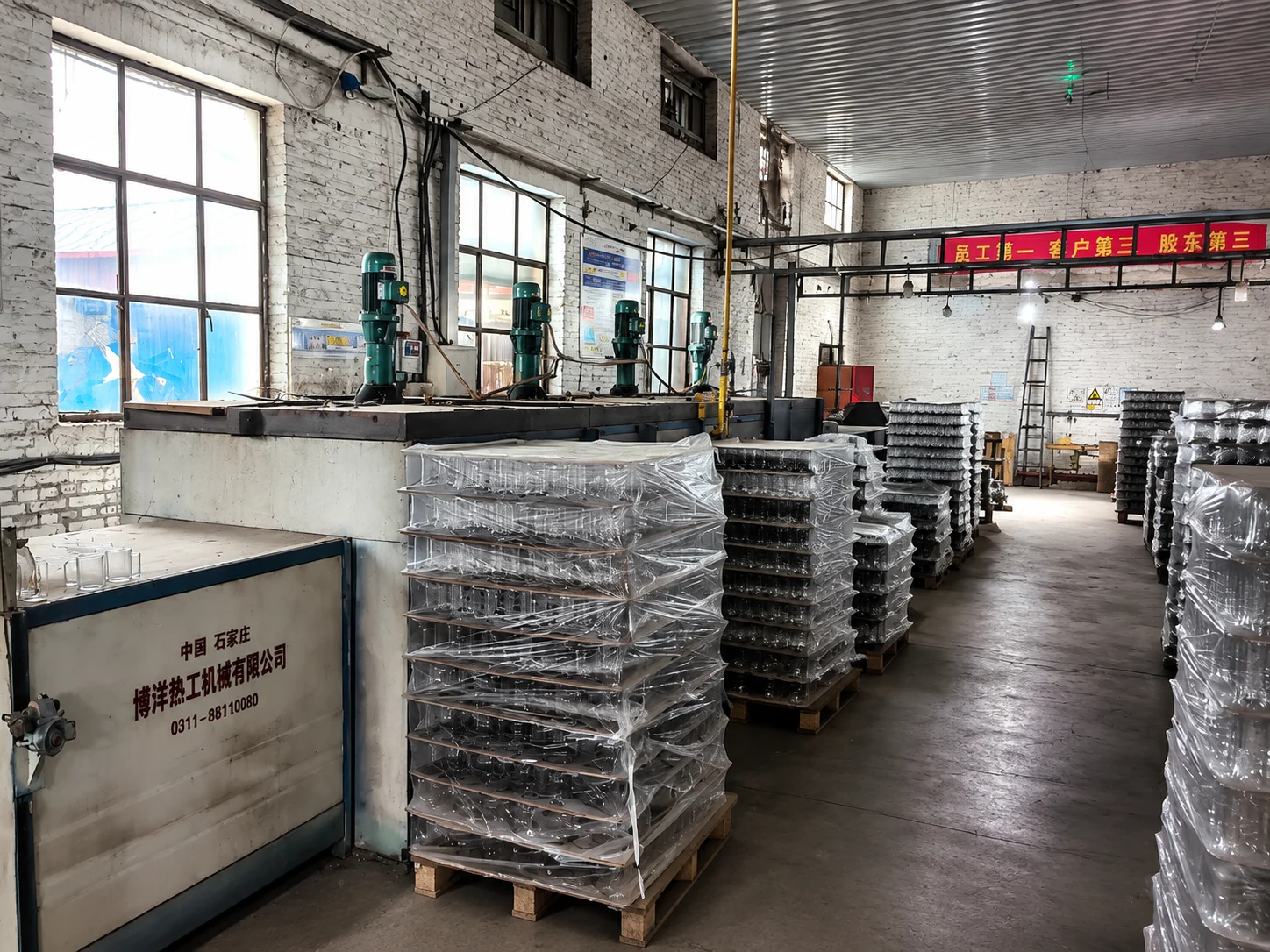
Handling and separation affect the condition presented for inspection. This is real partner-network imagery, not a named buyer lot.
Fifth check: decoration and version control
Decoration inspection compares the correct artwork, orientation, size, position and color appearance with the approved reference. For handled items, the viewing face must be defined. For a multi-color or multi-logo order, samples are distributed across each finished version.
We look for production concerns relevant to the selected method, such as incomplete appearance, obvious misalignment, contamination or inconsistent version identity. Any durability test follows the buyer-approved method. We do not use a quick rub test to claim a universal wash-life result.
At a version change, old decorated pieces and old packing materials should be cleared and identified. A beautiful print of the wrong logo is still nonconforming.
Sixth check: packaging and shipment identity
The inspector reviews the actual product inside the approved protective system. Checks can include glass-to-glass separation, movement, insert or divider, accessory position, inner quantity, retail artwork, barcode or label, export-carton condition and shipping marks.
Packing is inspected for the agreed distribution route. A retail box is not automatically approved for parcel delivery. If the buyer requires a drop, vibration or other test, the method and acceptance result should be agreed instead of improvised at final inspection.
Carton dimensions, gross and net weights and counts are compared with the packing record where required. These values affect freight and warehouse planning as well as product protection.
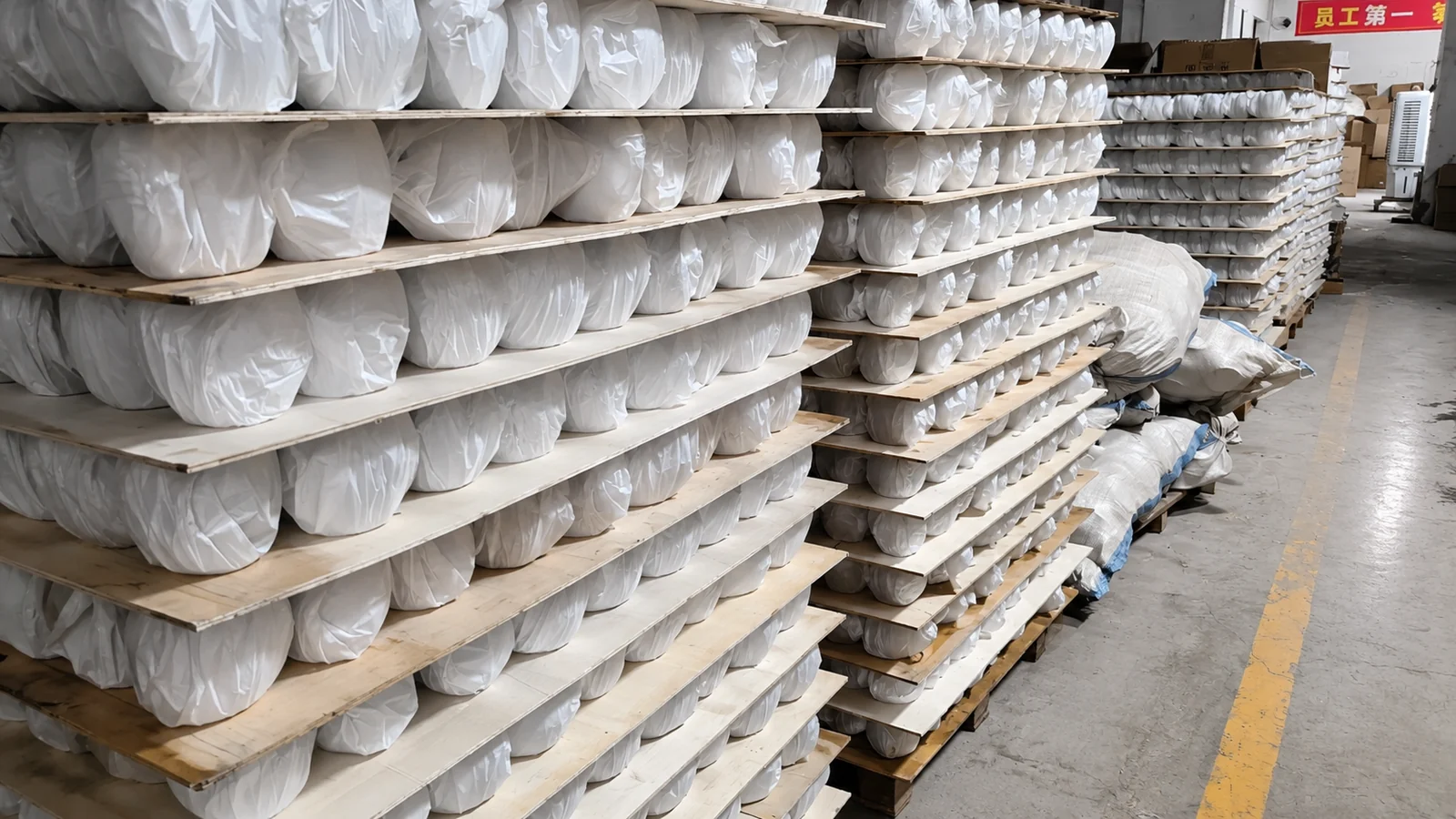
The release check connects the approved glass, inner protection, count and carton identity.
Review the packing routes available for glassware orders.
The report must support a release decision
A useful inspection report identifies the order and SKU, date and location, lot status, sampling method, references, results by checkpoint, defect or issue evidence, quantity reconciliation and overall conclusion under the agreed rule.
An inspection result is not automatically a shipment instruction. The buyer or authorized project owner decides whether to accept, hold, sort, rework or request more information according to the purchase agreement. We keep the status visible so held goods are not released because of a scheduling misunderstanding.
If rework or sorting is authorized, the team defines the affected scope and reinspection method. A verbal statement that the issue was fixed is not enough for release.
Our defect-control guide explains containment, root cause and reinspection after a problem is found.
MOQ and timing still affect the QC plan
Current-model trial orders on this site commonly use a 500–1,000-piece planning range, while standard OEM planning often starts around 2,000 pieces. The final MOQ depends on the actual SKU. A heavily fragmented order creates more identity and inspection work even when the total is large.
Current-model sample references commonly state 5–10 days after the requirement is clear. Bulk timing cannot be responsibly reduced to one fixed number. Quality planning includes sample approval, production checkpoints, final inspection, any corrective work and packing release. If a third-party inspection is required, booking time and report approval belong in the schedule.
Glassware quality control FAQ
What should buyers approve before inspection?
Approve the model or drawing, intended use, key measurements, appearance reference, decoration, components, packing, carton marks, sampling method and acceptance criteria. Identify which reference controls each point.
Does Guangyi Glass use AQL inspection?
We can coordinate an AQL-based plan when it is agreed for the order, or follow another buyer-specified method. The level and limits must be defined; we do not present one universal AQL as suitable for every product.
Is final inspection the same as 100% inspection?
No. Final inspection often uses a sampling plan. A 100% sorting or screening operation must be separately defined, especially for the specific condition being screened.
What happens if defects are found?
We identify and contain the affected material, report the evidence, review whether the issue is isolated or repeated, and agree the disposition. Sorted or reworked goods need an appropriate recheck before release.
Can buyers appoint their own inspector?
Yes. Send the inspection standard, booking contact, reporting route and approval references before the goods are ready. The third-party inspector should receive the same current specification used by production.
Does inspection prove legal or product compliance?
Factory or pre-shipment inspection checks the agreed order characteristics. Laboratory tests, certifications and regulatory documents are separate evidence routes and must be specified for the destination and claim.
Send the acceptance criteria with the RFQ
Tell us the intended use, critical functions, appearance level, decoration, components, packing route and any buyer or third-party inspection method. We will connect those requirements to the sample and production file so the final report answers a real release question.
Review our QC capability, prepare the product RFQ, or contact Guangyi Glass about an inspection plan.