
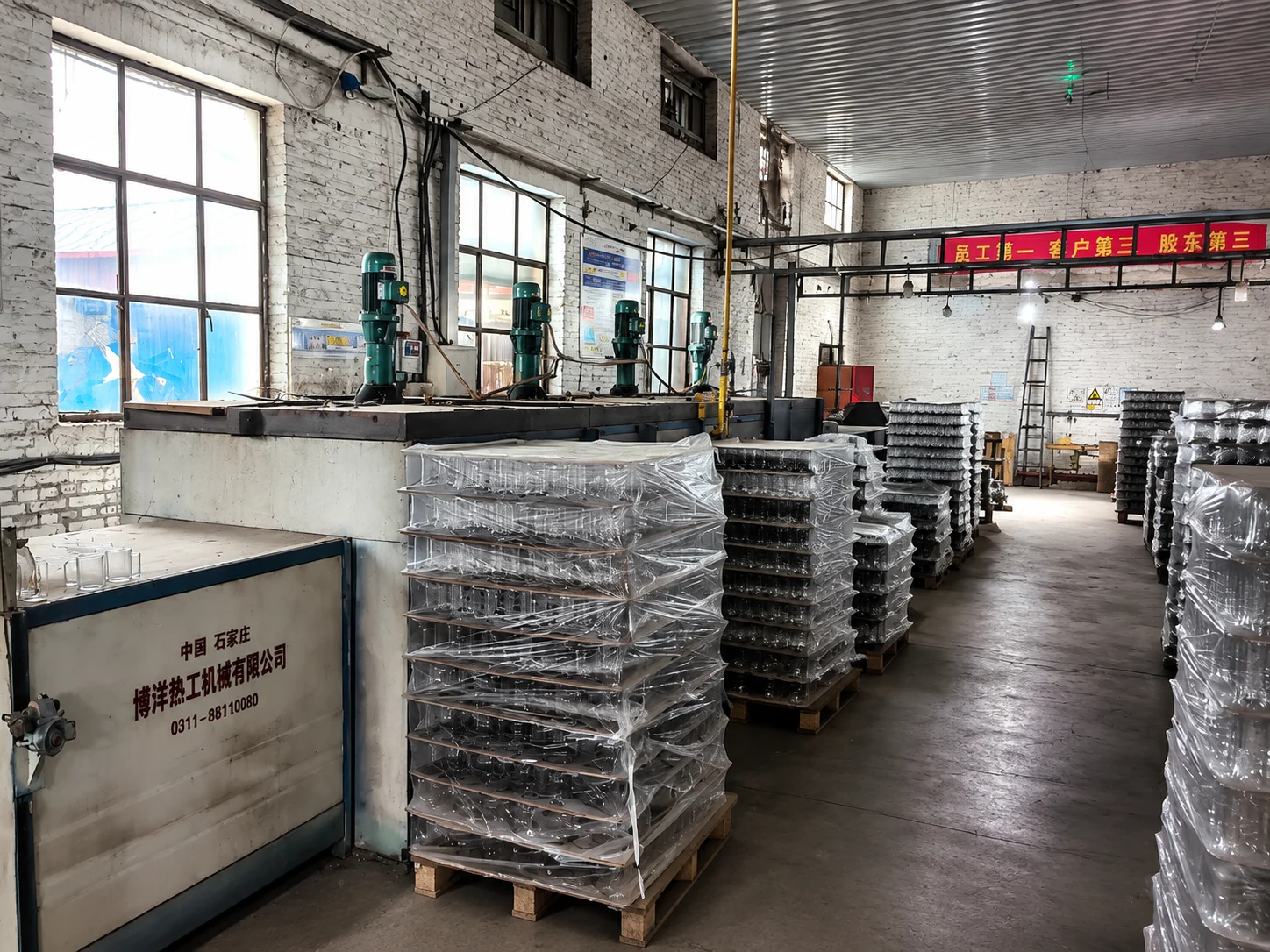
Final inspection can identify a problem, but it cannot make thousands of finished pieces correct. Effective glassware defect control begins by defining the unacceptable condition, watching the process that can create it and containing a signal before it reaches every carton.
Guangyi Glass coordinates buyers, selected manufacturing partners, decoration and packing suppliers, and inspectors. Our role is to keep the approved standard and issue status visible across those parties. We do not promise “zero defects,” and we do not call every natural glass variation acceptable. We define the product-specific risk, method and release rule.
First define what the buyer means by a defect
The word can describe a sharp rim, a dimensional mismatch, an unstable base, a visible inclusion, a distorted logo, a wrong lid, a missing accessory or a damaged carton. These conditions do not have the same cause or commercial effect.
Before bulk production, we organize requirements into groups:
- safety or intended-use blockers;
- dimensional and interface problems;
- visible glass appearance;
- decoration and color;
- component or SKU identity;
- packaging and transport damage.
The approved sample helps set an appearance reference, while drawings, artwork and packing instructions control other points. We state which reference applies. A buyer who needs a particular regulatory or laboratory result must identify that separately; factory defect control cannot replace destination-market compliance evidence.
Turn prior concerns into a risk list
We ask the buyer what would make the product unusable or unsellable in the target channel. A storage-jar buyer may prioritize lid fit. A cafe may prioritize rim and logo orientation. A gift-set buyer may be most exposed to wrong accessories or damaged retail boxes.
The production partner also identifies process risks for the selected construction. A handled cup, double-wall body and simple tumbler have different control points. Decoration and packing add their own risks after the glass body is made.
We use the list to decide where a check is most useful. Finding a wrong artwork version during setup is better than finding it after every piece is printed. Finding repeated contact marks between finishing and packing is better than sorting complete export cartons. The risk list is practical only when it names the process stage, observation and response owner.
Prevent specification errors before process defects
Some serious “quality problems” are actually order-definition errors. Production followed one file while the buyer expected another. The wrong capacity entered the box because similar SKUs had weak labels. An old logo remained in the decoration folder.
We reduce these risks with one version-controlled production pack:
1. Current model or drawing and approved sample identity.
2. Quantity by capacity, color, logo and pack.
3. Current artwork and decoration position.
4. Component and accessory list.
5. Packing instruction and carton marks.
6. Inspection criteria and authorized release route.
Changes after approval are logged and reviewed. If a lid changes, the fit and insert may need another sample. If a logo grows, decoration placement may need another approval. If the carton count changes, protection and freight figures may change. We do not treat those as harmless text edits.
Watch startup and changeovers closely
The first acceptable pieces after setup help show whether the process is aligned with the approved standard. Relevant checks depend on the operation: model identity, visible form, dimensions, component fit, decoration placement or pack arrangement.
Changeovers deserve attention because old materials can remain. When a line moves from one logo, capacity or color to another, pieces and packaging from the prior SKU should be cleared and identified. The first pieces of the new version are checked before the run continues.
This does not mean one startup check controls the whole production lot. Process conditions and handling can change. The partner uses appropriate in-process monitoring, and our project team asks for status on the characteristics identified as important. The agreed frequency depends on the product and risk.
Separate isolated damage from a repeated process signal
When a nonconforming piece is found, we ask where it came from and whether nearby pieces show the same pattern. One handling mark may be isolated. Similar marks concentrated in one tray or production period can indicate repeated contact. One wrong lid can be a packing mistake; several in the same carton group can indicate component mixing.
We record the SKU, process stage, time or lot identity when available, carton or area and photographs with scale. That information is more useful than a folder named “defects” with no traceability.
The team then contains the suspected scope. Finished goods, work in progress, components or packing materials may need to be held. The containment boundary can expand if evidence shows the issue began earlier. Goods under review should have a visible status so schedule pressure does not release them accidentally.
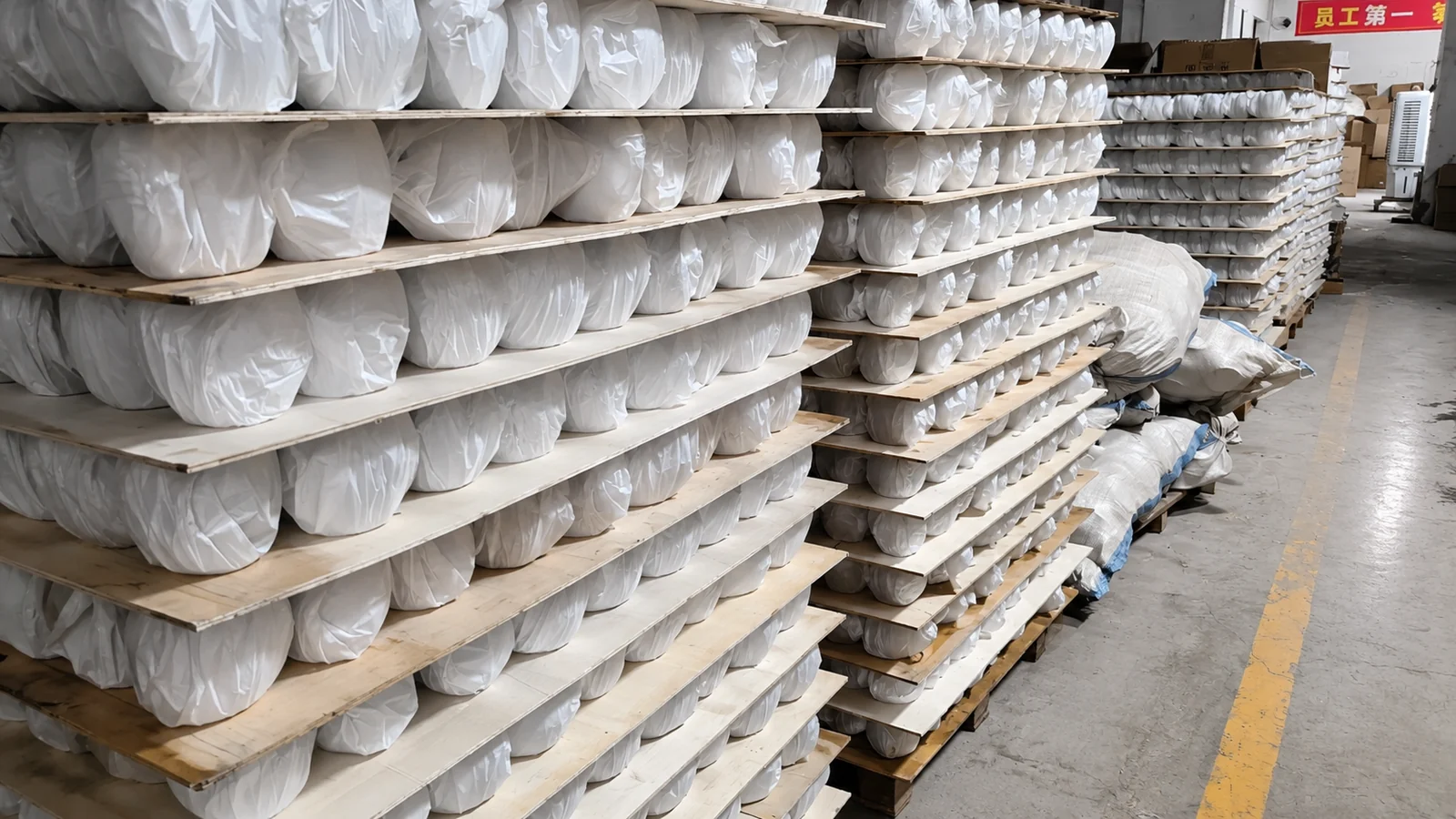
Separation and status control help prevent affected material from mixing back into released stock.
Cause analysis must go beyond the visible symptom
The visible defect is not always the root cause. A logo is misaligned, but the cause may be an unclear orientation reference or fixture setup. A jar lid feels loose, but the issue may involve both glass opening variation and gasket compression. Carton breakage may begin with an insert dimension, packing orientation or transport condition rather than the glass body alone.
We ask the responsible production or packing team to examine the process that created or failed to detect the issue. The analysis should distinguish:
- occurrence cause: why the condition was produced;
- escape cause: why the existing check did not catch it;
- system cause: why the instruction, sample or version control allowed it.
The depth of analysis should match the risk and recurrence. We do not claim a formal corrective-action system for every minor observation, but repeated, safety-relevant or commercially serious issues require more than removing the visible pieces.
Sorting, rework and replacement are different dispositions
Containment tells us what is held; disposition tells us what happens next.
Sorting separates conforming and nonconforming pieces using one defined criterion. The team needs a clear visual or measurement reference and a way to record the screened quantity. “Check carefully” is not a sorting instruction.
Rework changes the product or pack. It may be possible for some decoration, component or packaging issues, but not every glass-body condition can be repaired responsibly. The production partner confirms feasibility, and the buyer approves the route where required. Reworked goods are not automatically released; they need a check appropriate to the changed characteristic.
Replacement means producing or supplying acceptable quantity in place of rejected goods. The schedule and commercial responsibility depend on the order agreement and confirmed cause. We document the quantity and version so the replacement does not create another SKU mismatch.
Use-as-is acceptance is a buyer decision under an agreed concession, not something the supplier should assume. The affected characteristic and quantity should be recorded.
Reinspection answers whether the corrective work was effective
After sorting or rework, reinspection focuses on the original issue and any new risk introduced by the corrective operation. Repacking, for example, can solve a count or insert issue but create extra handling marks if it is uncontrolled.
The report identifies the held quantity, disposition, completed quantity, sampling or screening method, results and remaining status. If a third-party inspector is involved, the buyer should state whether a reinspection is required and who authorizes release.
This is different from routine final inspection. Our glassware quality control guide explains how lot status, sampling, product checks and the release report normally work.
Packaging defects need their own prevention loop
Glass can leave production in acceptable condition and arrive at final inspection with damage caused during internal movement or packing. We therefore review contact points, divider or insert fit, accessory position, carton count and movement.
The correct pack depends on the distribution channel. Bulk operating stock, store retail, gift sets and parcel delivery create different handling. A color box can be visually approved but still need an outer parcel solution. If the buyer requires a drop or transport test, the method must be agreed and performed on the final product-pack combination.
Carton marks and barcode or label identity are also defect-control points. A structurally sound box with the wrong SKU information can send product to the wrong market or make it unsellable.
See the packaging options and questions we review.
Use complaint evidence to improve the next order
If a buyer reports an issue after delivery, we ask for evidence that allows tracing: purchase order, SKU, carton or lot information, affected quantity, photographs or video, discovery stage and handling context. We do not begin by assuming every breakage has one cause, and we do not dismiss a complaint because the shipment passed a sampling inspection.
We compare the complaint with production, inspection and packing records. The result may change the next order’s specification, sample, in-process checkpoint, pack or inspection plan. Repeat orders should use that learning rather than simply reuse the old file.
Buyer storage and distribution conditions can also matter. The goal of the review is to identify evidence and action, not to assign blame before the facts are organized.
MOQ and schedule influence prevention choices
Current models on this site often use 500–1,000 pieces as a trial-order planning reference, and standard OEM planning often starts around 2,000 pieces. A final minimum is confirmed by SKU. Many small variants add changeovers and mixing risks, so MOQ planning and defect prevention are connected.
Current-model samples commonly use a 5–10-day reference once scope is clear. New development or complex packing requires more steps. We do not publish one fixed bulk lead time. The project plan should include sample approval, process setup, production checks, final inspection and enough time for corrective action if a real issue appears. A shipment date that leaves no decision time turns quality status into a schedule crisis.
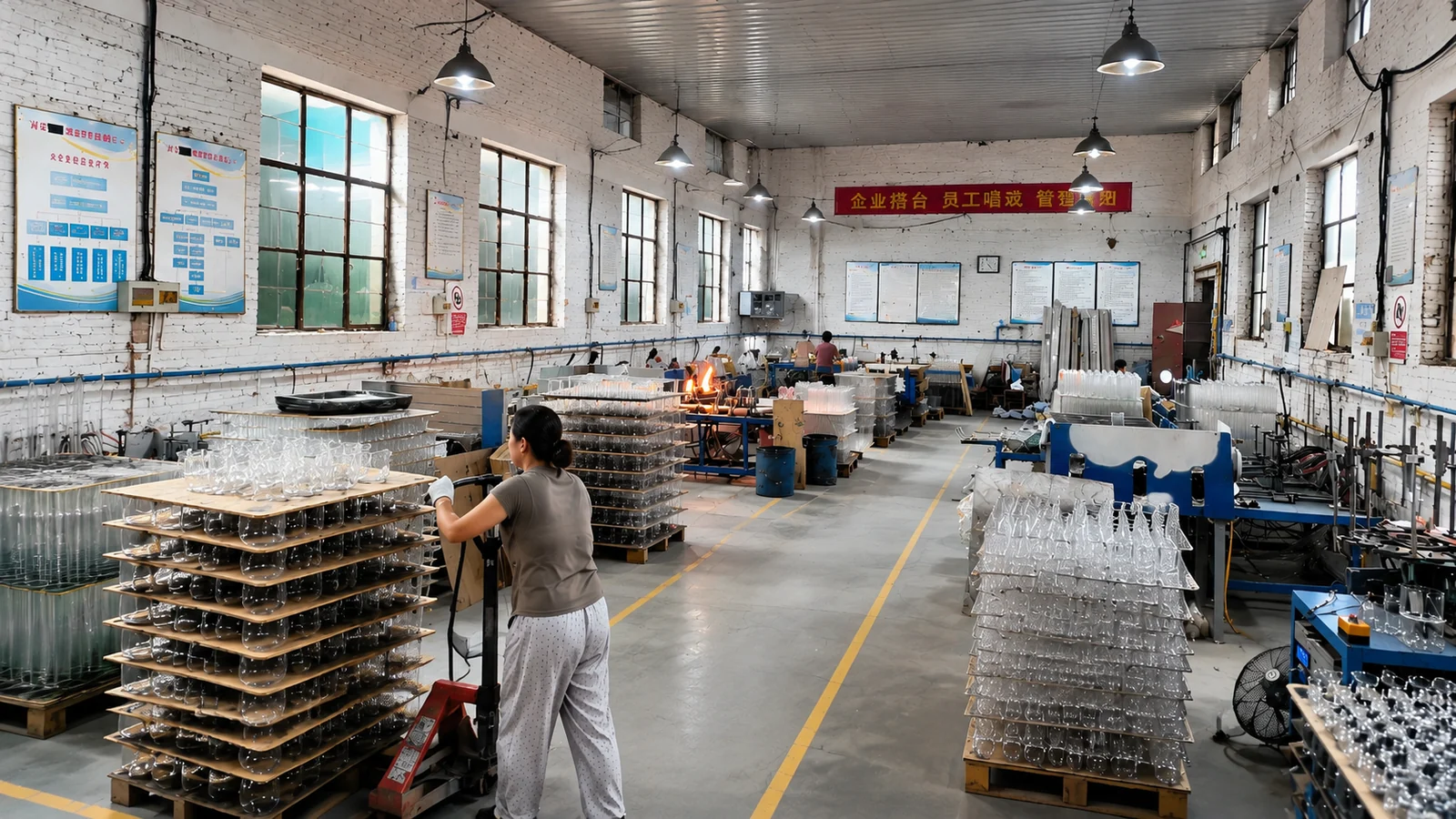
The selected partner, process checkpoints and release plan are confirmed for the actual order.
Glassware defect control FAQ
Can all glassware defects be eliminated?
No responsible supplier should promise zero variation or zero defects for every process. We define unacceptable conditions, control important risks, inspect under an agreed method and contain nonconforming material when it appears.
What is the difference between inspection and defect control?
Inspection evaluates product or lot status under an agreed plan. Defect control also includes specification prevention, process monitoring, containment, cause analysis, corrective action and feedback into future orders.
What happens when a repeated defect is found?
We identify and hold the suspected scope, collect traceable evidence, review the occurrence and escape causes, agree sorting, rework or replacement where appropriate, and reinspect before authorized release.
Can buyers define their own defect limits?
Yes. Send the product use, critical conditions, appearance examples, measurement method and acceptance plan before bulk production. The limits must be feasible for the selected process and written into the approved specification.
Is 100% sorting always the best solution?
No. It may be suitable for a clearly detectable condition, but the criterion, method and verification must be defined. It also does not replace correcting a repeated process cause.
How should a buyer report a claim?
Provide the order and SKU, carton or lot identity, affected and checked quantities, clear images or video, when the issue was found and relevant handling conditions. Preserve samples where practical until both sides agree the review route.
Put the highest-risk condition in the RFQ
Tell us which defect or failure would matter most in your market, how it should be judged and which product, component or pack is involved. We will connect that condition to the sample, production checkpoints and inspection plan instead of waiting for a generic final check.
Review our QC coordination capability, prepare the RFQ inputs, or send the project and risk list to Guangyi Glass.