
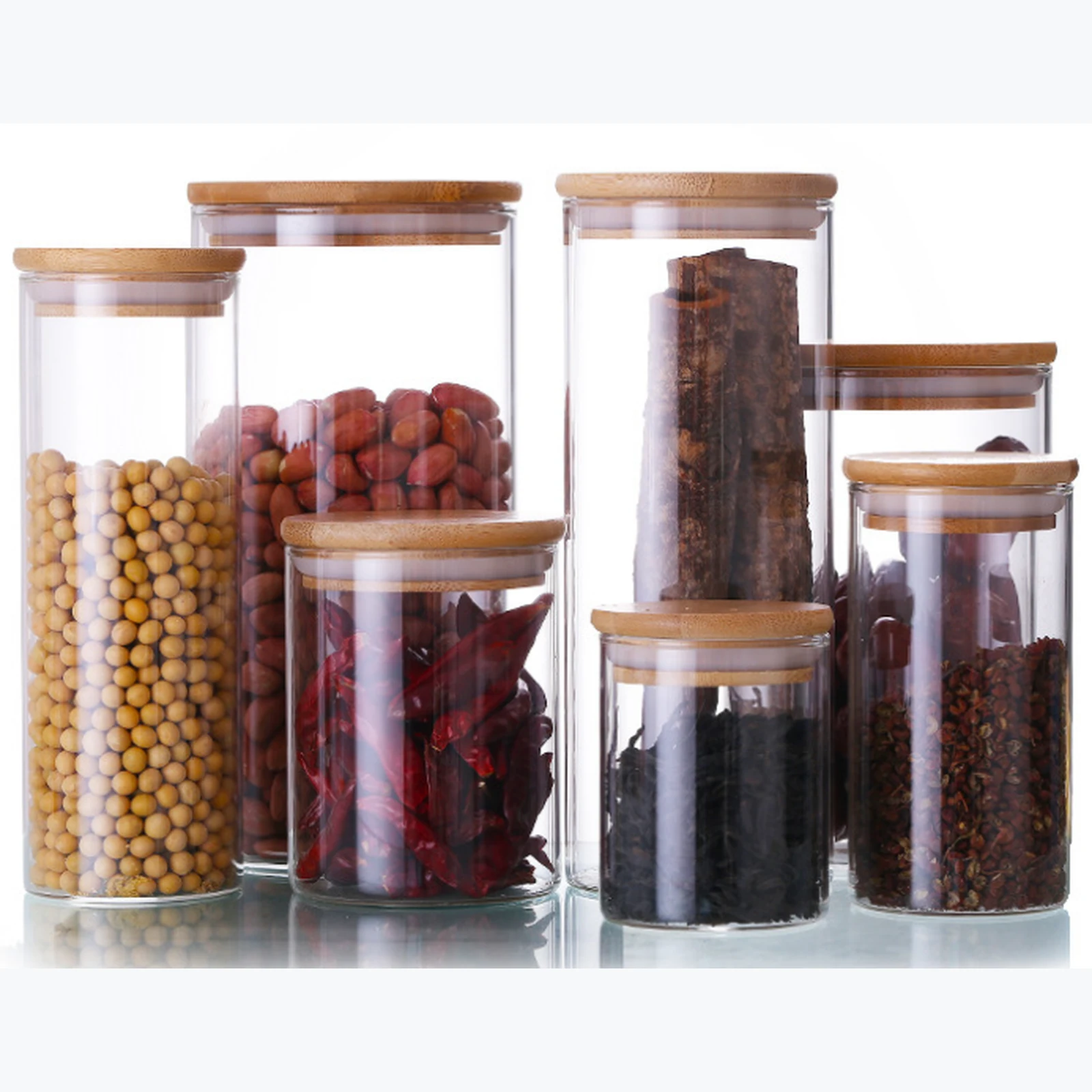
When a buyer asks us for a glass storage jar quotation, the photograph is rarely the difficult part. The difficult part is turning a good-looking jar into a repeatable retail range: the lid must fit, the seal must suit the intended use, the mouth must be wide enough, every size must look related, and the set must survive its chosen distribution route.
We coordinate current glassware models and OEM development with production partners. We do not treat every catalogue capacity, lid or performance statement as automatically approved. Our job at the beginning is to identify what is already documented, what must be measured on a sample, and what needs a new development route. That distinction prevents a buyer from paying for packaging or artwork before the actual jar system is stable.
The key decision is the jar system, not one jar
A buyer may plan to sell five capacities, but customers will see one collection. We therefore review the range as a system. The body proportions, lid diameter, label position, color and packaging language should make sense together. At the same time, production cannot treat “one collection” as one SKU. Each combination of size, lid, decoration and retail pack becomes a finished item with its own quantity and approval record.
We start with the contents. Coffee beans, flour, tea, pasta, confectionery and non-food products have different fill behavior. A nominal 1,000 ml jar does not tell us how much of a particular product fits at the buyer’s desired headspace. We ask for the intended contents, target net weight if relevant, usable fill line and whether a scoop must pass through the opening. For a food brand, the buyer also needs to determine the destination-market testing and labeling requirements; we can then align the product and document request with that brief.
The next questions are operational:
- Will the jar be opened daily or mainly displayed?
- Does the lid need a removable seal, a fixed gasket or no sealing claim?
- Must several sizes share one lid diameter?
- Is shelf height, cabinet depth or pallet efficiency the limiting dimension?
- Will the item ship as one jar, a nested set or a gift collection?
These answers influence the model choice much more than a trend photograph does.
A useful current-model starting point
Our current product record for CS9005 covers a cylindrical borosilicate-glass family from 200 ml to 2,000 ml, with lid, label and set-size options. The recorded planning baseline for current-model trial orders is 500–1,000 pieces, and the recorded sample lead time is normally 5–10 days once the requested sample is defined. Those figures are not a universal promise: quantity per capacity, lid availability, decoration, custom box work and the production schedule all have to be reconfirmed for a dated quotation.
Review the CS9005 cylindrical glass storage jar family.
This model is useful when a buyer wants to test a pantry range without beginning with new glass tooling. It gives us existing bodies to measure and compare. It does not remove the need to approve the exact lid-body combination. Even two components described with the same nominal diameter can behave differently because of tolerances, gasket compression or the way the lid sits on the rim.
When CS9005 is not the right geometry, the broader glass storage jar range includes large, square, narrow-mouth and wood-lid directions. We compare current routes first. A new mould becomes a separate decision only when the required shape, opening or brand identity cannot be achieved responsibly with an existing body.
Why range architecture changes MOQ
Buyers sometimes send a total such as 3,000 jars and expect that number to support any assortment. In production planning, 3,000 identical plain jars and 3,000 units divided among six capacities, two lid colors and three printed boxes are very different projects. The second request creates many small finished SKUs, separate packing materials and more changeovers.
For CS9005 and other recorded current models, 500–1,000 pieces is a trial-order planning reference. Standard OEM planning elsewhere in our current product records begins around 2,000 pieces, but the final minimum belongs to the actual configuration—not to the website headline. A printed carton supplier may have one economical run size, a lid finish may require another, and glass availability may differ by capacity.
We normally ask the buyer to prepare a simple allocation table:
| Capacity or model | Lid | Decoration | Retail pack | Quantity |
|---|---|---|---|---|
| Core size | Approved option | Artwork A | Single box | Buyer input |
| Secondary size | Approved option | Artwork A | Single box | Buyer input |
| Set configuration | Approved option | Set label | Set box | Buyer input |
This table exposes fragmentation before sampling. If the first order is too divided, we may suggest one or two core capacities with shared artwork and export-safe packing. That is not a claim that every project can accept a lower MOQ. It is a practical way to ask the relevant component suppliers and production partner for a feasible trial route.
Our MOQ guide explains why model, decoration and packing minimums must be checked together.
Mouth, lid and seal must be approved as one assembly
The most expensive jar problems are often interface problems. A glass body can be within its normal tolerance while a wooden lid, metal lid or gasket comes from another process with its own variation. If the two sides are approved independently, the finished assembly may feel loose, sit unevenly or require too much force.
For a physical sample, we record the exact body and lid version. We check seating, removal, visible alignment and normal handling under the intended use. If the buyer wants an airtight or leak-related claim, the acceptance method must be defined instead of inferred from appearance. Dry-food storage, liquid transport and decorative closure are different use cases.
We also check the opening against the product and user. A wide mouth may be necessary for a scoop or dishwasher access. A narrower mouth can improve the visual proportion of a tall jar but make filling difficult. If the jars are used in a commercial refill operation, we ask how staff will fill, close, label and clean them. The approval should reflect that real process.
Label and decoration need a physical surface review
A flat artwork file can hide problems that become obvious on curved glass. Long text can wrap too far from the main viewing angle. A label can bridge a change in diameter and lift at the edge. A printed scale can become misleading if it is placed against a nominal rather than verified capacity.
We ask for vector artwork, target dimensions, color references and the required viewing face. A plain sample helps confirm the available area. A decorated sample is used when the logo position, print appearance or label adhesion is commercially important. The buyer should approve both the art file and a written placement reference; “same as the photo” is not precise enough for bulk QC.
Claims on the label also stay with the buyer’s compliance brief. We will not turn “looks heat resistant” or “appears airtight” into an unsupported statement. Material, intended use and required evidence need to be agreed before those words go on packaging.
The packing test starts after the set is frozen
Storage jars combine empty volume with fragile rims and sometimes heavy lids. Freight cost can be affected more by the carton cube than by the glass unit price. For a multi-size set, nesting may reduce volume, but it can introduce glass-to-glass contact or make unpacking harder. For individual retail boxes, every capacity may need a different insert.
We review four levels separately:
1. Surface protection around the jar and lid.
2. Inner-box or divider control that limits movement.
3. Export-carton count, orientation and identification.
4. Parcel-delivery requirements if the buyer sells online.
A retail color box is not automatically an e-commerce shipping pack. If parcel delivery matters, the buyer should provide the channel requirement or test method before the pack is approved. We can then coordinate a packing sample around the final jar, lid and artwork rather than guessing from a catalogue dimension.
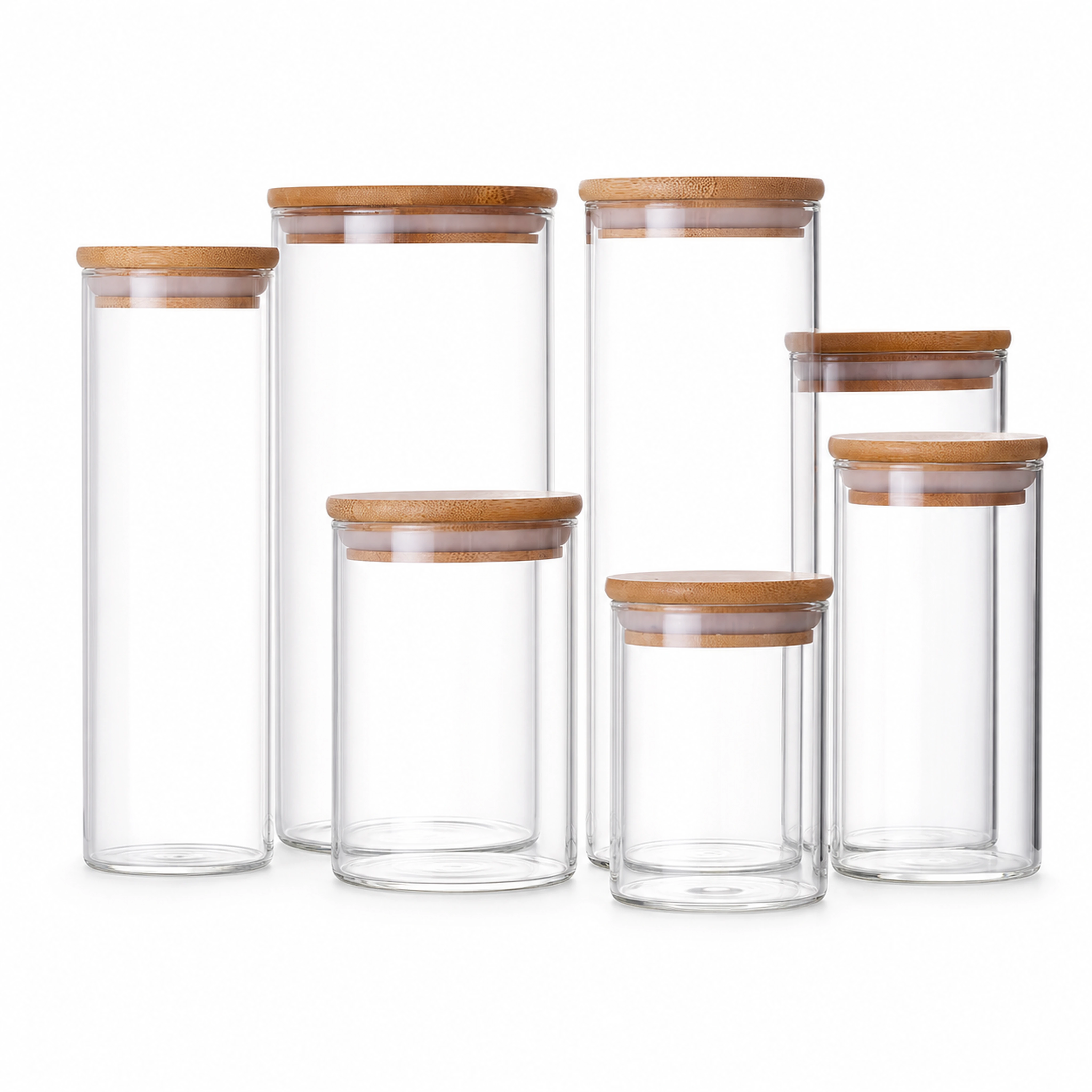
The actual body and lid combination should be measured before inserts, labels and carton counts are locked.
See the packaging routes we review for glassware projects.
Our sample sequence for a new storage range
We prefer to make each sample answer a written question. A current plain sample can answer whether the shape, capacity direction, opening and shelf proportion are suitable. A component-fit sample can answer whether the selected lid works with that body. A decorated sample answers artwork questions. A packing sample answers protection and presentation questions.
Not every project needs four separate shipments, but every project should identify which of those approvals has actually happened. A plain stock sample cannot approve a custom gasket. A digital box rendering cannot approve the physical insert. A production sample with temporary decoration cannot silently become the color standard.
For the recorded current-model route, 5–10 days is the normal sample reference after scope confirmation. New tooling, a custom lid, special finish, revised decoration or complete retail packaging can add steps. We quote the dated sample plan only after checking component and production-partner availability.
QC for storage jars focuses on interfaces and identity
Our inspection brief begins with the approved sample and specification. For a jar range, relevant checks can include product identity, dimensions or capacity method, rim condition, base stability, lid fit, gasket presence, decoration position, SKU-to-box match, count and carton marks. The exact limits and sampling method must be written for the order.
We separate a sharp or function-blocking issue from a cosmetic variation. We also separate a repeated process signal from an isolated observation. If nonconforming pieces are found, the affected lot is identified and contained; any sorting or rework route needs defined criteria and a recheck before release. The deeper method is covered in our glassware quality control guide and QC capability page.
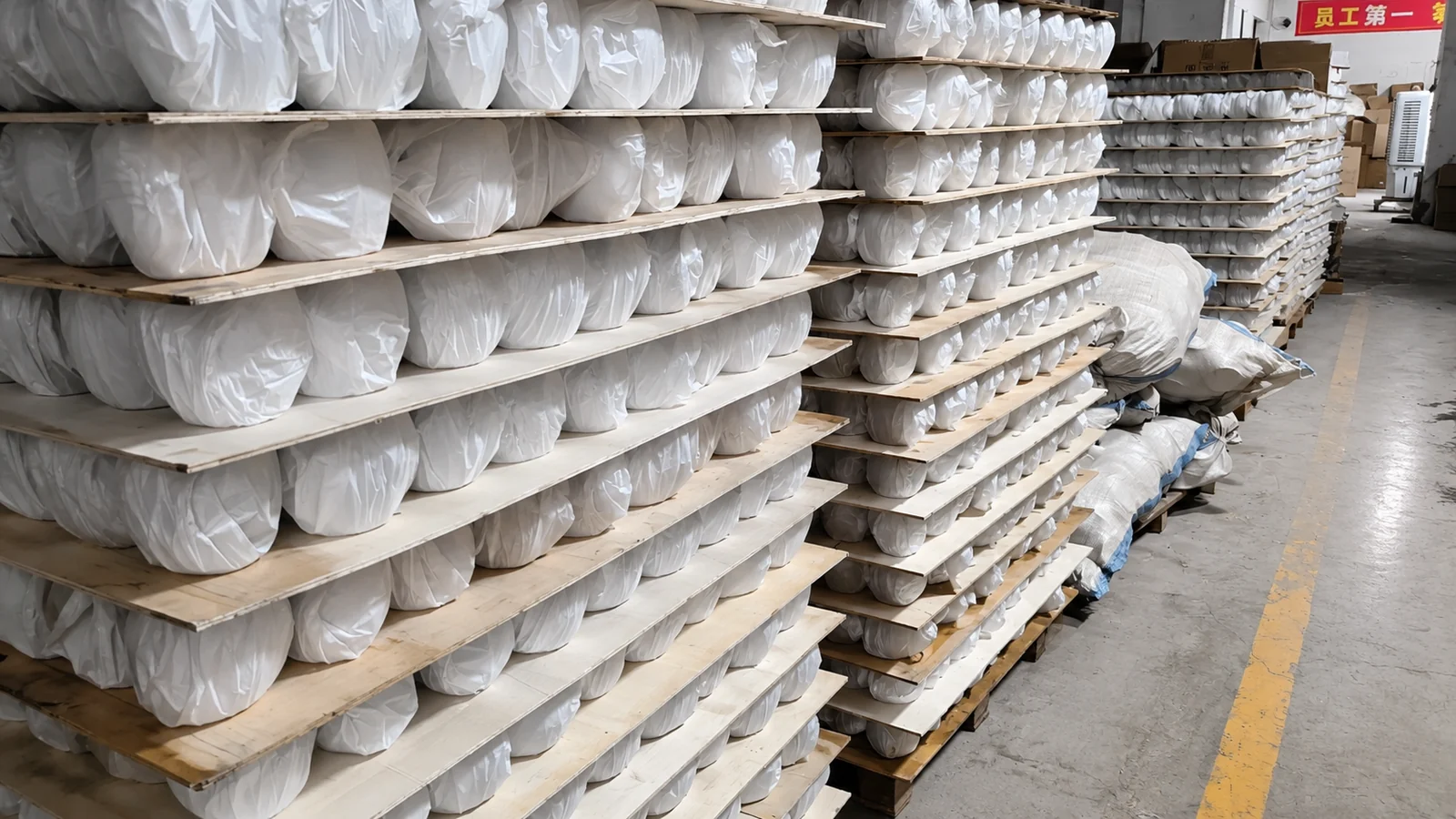
Real handling imagery from the supply network. It does not represent a named customer order.
Lead time depends on the longest unresolved item
We do not publish one fixed bulk-production promise for all jar projects. A current body with a confirmed lid and plain export pack follows a shorter decision path than a six-size collection with custom boxes and a new color finish. The working timeline normally includes specification review, sample preparation, approval, component readiness, bulk scheduling, decoration, inspection, packing and shipment handover.
The buyer’s approval dates matter. If the capacity split changes after boxes are ordered, or the lid changes after the insert is sampled, the schedule has to be reviewed. Freight timing is quoted separately according to destination, Incoterm and booking conditions. This keeps factory readiness and transit assumptions visible instead of hiding both inside one unsupported delivery date.
FAQ for glass storage jar buyers
Can you customize an existing glass storage jar?
Yes, subject to the model and production review. Current options can include lid selection, label or logo direction and set packaging. We confirm the available body, component fit, quantity per SKU and sample scope before quoting.
What is the MOQ for CS9005?
The recorded planning baseline is 500–1,000 pieces for current-model trial orders. The final MOQ depends on capacity allocation, lid, decoration and pack. Custom OEM configurations and fragmented assortments may require a higher minimum, so the dated quotation controls.
How long does a storage jar sample take?
The current-model record uses 5–10 days after the sample scope is clear. Custom components, new tooling, decoration or complete packaging can add approval stages. We confirm timing after checking availability.
Can one lid be used across several capacities?
Sometimes, if the selected bodies share a compatible opening and the approved components fit within tolerance. We verify this on the actual body-lid combinations; a matching catalogue diameter alone is not enough.
Can you make a custom retail set?
We can review single boxes, set boxes, labels and export cartons. The pack is developed after the jar sizes, lids, set count and sales channel are defined. Parcel delivery may require a different protection brief from store distribution.
What should be included in the RFQ?
Send the intended contents, preferred model or image, capacity list, quantity per capacity, lid direction, decoration, set configuration, destination, pack route and what the sample must prove. Include the target delivery window, but keep approval and freight assumptions visible.
Send a range brief we can check
For a useful glass storage jar quotation, send more than a total quantity. Give us the capacity allocation, contents, lid direction, branding, pack and destination. We will compare the request with current models, state which details are confirmed, identify what must be sampled and return a production route that can be checked before money is committed.
Browse current glass storage jars, prepare the RFQ with our checklist, or send your project to the Guangyi Glass team.