
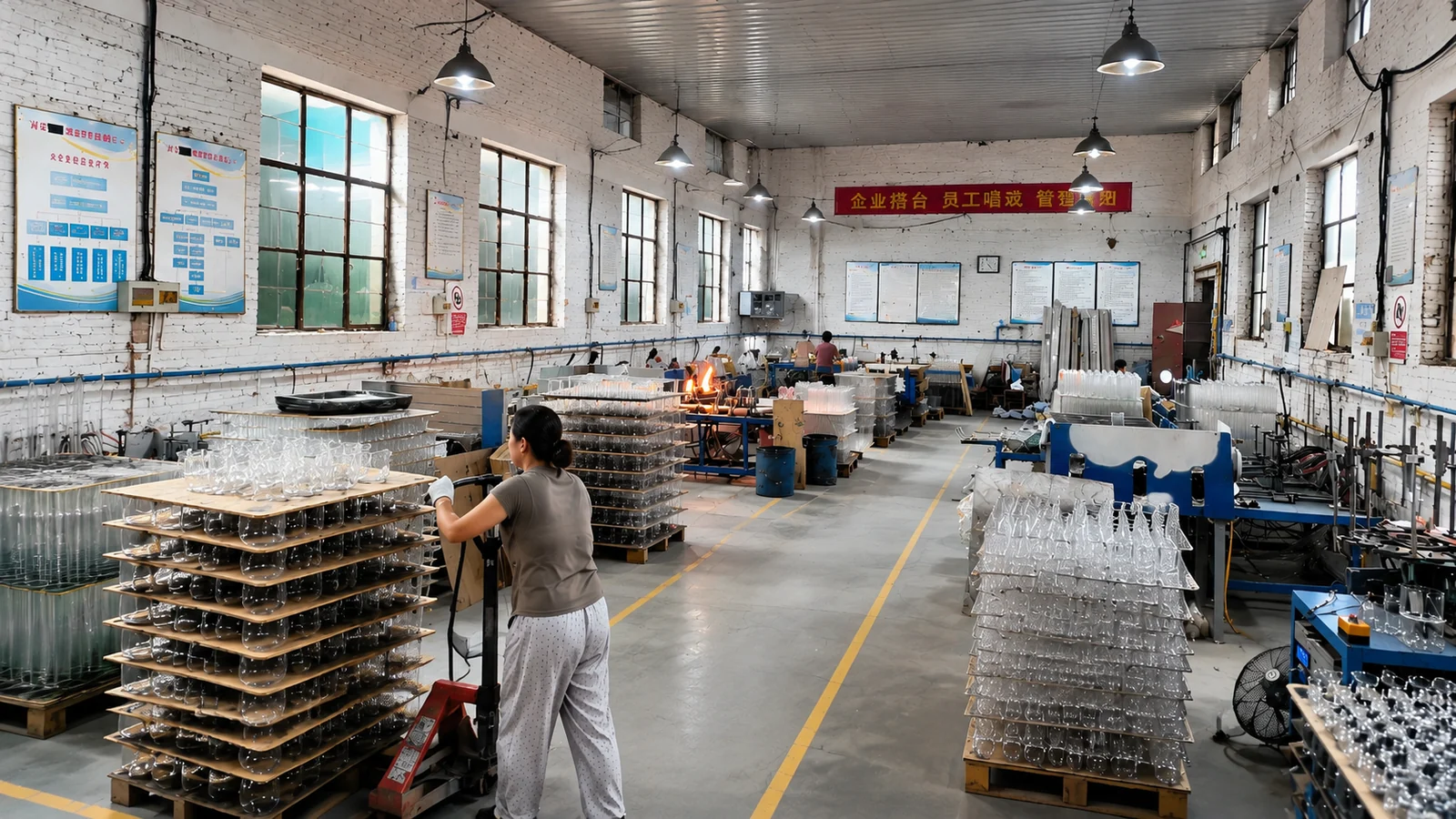
Coffee brands often send us an attractive cup reference before they send the drink menu. We understand why: the glass is part of the brand photograph. But the right procurement decision starts with what goes inside it, how the customer holds it and whether it will be served in a café, sold as merchandise or shipped as an online gift. The same shape can behave very differently across those channels.
Guangyi Glass coordinates product selection, OEM development, sampling, packaging and quality follow-up with production partners. The responsible manufacturing site is confirmed for each order. We use physical samples and written specifications rather than promising that a reference image proves capacity, thermal performance, logo quality or packing safety.
Start with the beverage, not the catalogue capacity
A coffee cup needs two capacity numbers: total brimful capacity and intended service fill. Espresso with crema, a flat white, a latte, iced coffee and a coffee cocktail each use headspace differently. Ice and milk change both fill and visual proportion. We ask the brand to measure its actual recipe instead of selecting the nearest catalogue number.
The sample review should include:
- target beverage and serving temperature;
- intended liquid fill, ice and headspace;
- rim diameter and drinking experience;
- base footprint for saucers, trays or cup holders;
- handle clearance or hand position;
- spoon, lid or sleeve compatibility;
- café service, retail shelf or parcel-delivery route.
For multi-size ranges, we look for a visible family relationship without assuming every capacity needs a separate body. A focused launch can use one or two meaningful sizes and collect customer feedback before adding the full range. Our coffee and tea glassware collection gives buyers current-product starting points.
Single-wall and double-wall solve different briefs
Single-wall glass provides a direct material feel and may suit café tumblers, handled mugs and cold-drink service. Double-wall construction creates a different visual and handling experience, but it also changes internal shape, apparent capacity, weight, manufacturing variation and QC points. We do not describe one as automatically “better.”
For double-wall cups, the brand should inspect the inner-wall shape, rim, base seal area, symmetry and usable fill. For handled products, it should test finger clearance and balance when filled. For iced drinks, check condensation and handling in the actual environment. For hot use, material and performance claims must be verified for the exact item and intended condition; a catalogue category does not replace a test basis or care instruction.
Our double-wall glass cup guide explains the construction-specific decisions. If a coffee brand wants a clear performance statement on packaging, we agree on the model, method and evidence before artwork is released.
Choose the product route before designing the brand range
There are three practical routes. The first is a current model with no decoration, useful when the brand wants a quick physical evaluation or a neutral café item. The second is a current model with a logo, color or custom pack. The third is a new shape or component route, which requires engineering review and may require a mold.
The current-model route often gives the clearest first-order learning. A brand can test beverage fit, photography, bar workflow and customer response before funding a new body. Customization can still be meaningful through logo scale, set composition, lid, sleeve, color or packaging—after each addition is checked for feasibility.
A new mold makes sense when the required capacity, profile, grip or brand geometry cannot be achieved with a current model and the expected volume supports development. We do not recommend new tooling simply because a sketch exists. The drawing, manufacturing route, MOQ, trial plan and correction responsibility must be discussed first.
Logo approval needs a real curved surface
Coffee-brand artwork often contains fine type, a compact icon or a wraparound mark. Curvature and taper change how it looks. We ask for editable vector artwork, target size, position and color reference. We then review the printable area for the selected decoration method.
Pantone references can define a color target, but the decorated physical sample and agreed production tolerance should govern approval. Monitor colors, glass transparency and surrounding liquid can all change perception. White ink on an empty clear cup may read differently after dark coffee is poured.
We also ask how the item will be washed and handled. A logo for a limited promotional gift and a logo for repeated café service may need different validation. We avoid an unsupported durability promise; if the buyer requires a defined wash or abrasion test, the exact method and acceptance rule should be written into the project.
Sampling should recreate the sales channel
Current-model sample preparation is commonly 5–10 days in our verified product information once the exact sample is agreed. A decorated sample, sprayed color, custom lid, new mold or complete retail pack requires a separate schedule. Courier time and brand approval are additional.
We ask coffee brands to evaluate more than appearance. Fill the cup with the intended recipe. Photograph it under the brand's normal lighting. Carry it on the service tray. Check how fingers meet the handle or wall. Test the lid, spoon or saucer. If it will be sold online, place the full set in the proposed insert and review the unboxing order.
The approval record should list model, measured capacity basis, dimensions, artwork version, color reference, components and pack. “Same as sample” is useful only when both sides can identify which sample and which written details still apply.
MOQ depends on the finished coffee SKU
Some verified current-product pages show a 500–1,000-piece trial-order range for that specific model. We confirm every coffee project separately. Forming route, double-wall construction, decoration, sprayed color, lids, sleeves and printed boxes can each change minimums.
A common mistake is to meet a total order quantity but split it across too many finished SKUs. Two capacities, three colors and two artwork versions create twelve combinations before packaging is counted. Each combination needs setup, identification and QC. For a first run, we may suggest one core size, one logo version and a shared pack. The production and component partners still need to confirm feasibility; range simplification is not an automatic low-MOQ promise.
Ask for quantity and MOQ per size-color-artwork-pack combination. That is the number the production plan uses. Our glassware MOQ guide explains why catalogue MOQ and finished-SKU MOQ can differ.
Café cartons and e-commerce packs are not the same
A café replenishment carton prioritizes separation, counting and efficient back-of-house handling. A retail gift box prioritizes presentation. An e-commerce pack must also account for parcel handling. One box cannot be assumed to perform all three jobs.
We review contact points around rims, handles and double-wall surfaces; prevent components from moving; and confirm units per retail box and master carton. A color box may need an insert plus an export carton. Sets with saucers, lids or spoons require a full packing sample because a late component change can alter every cavity.
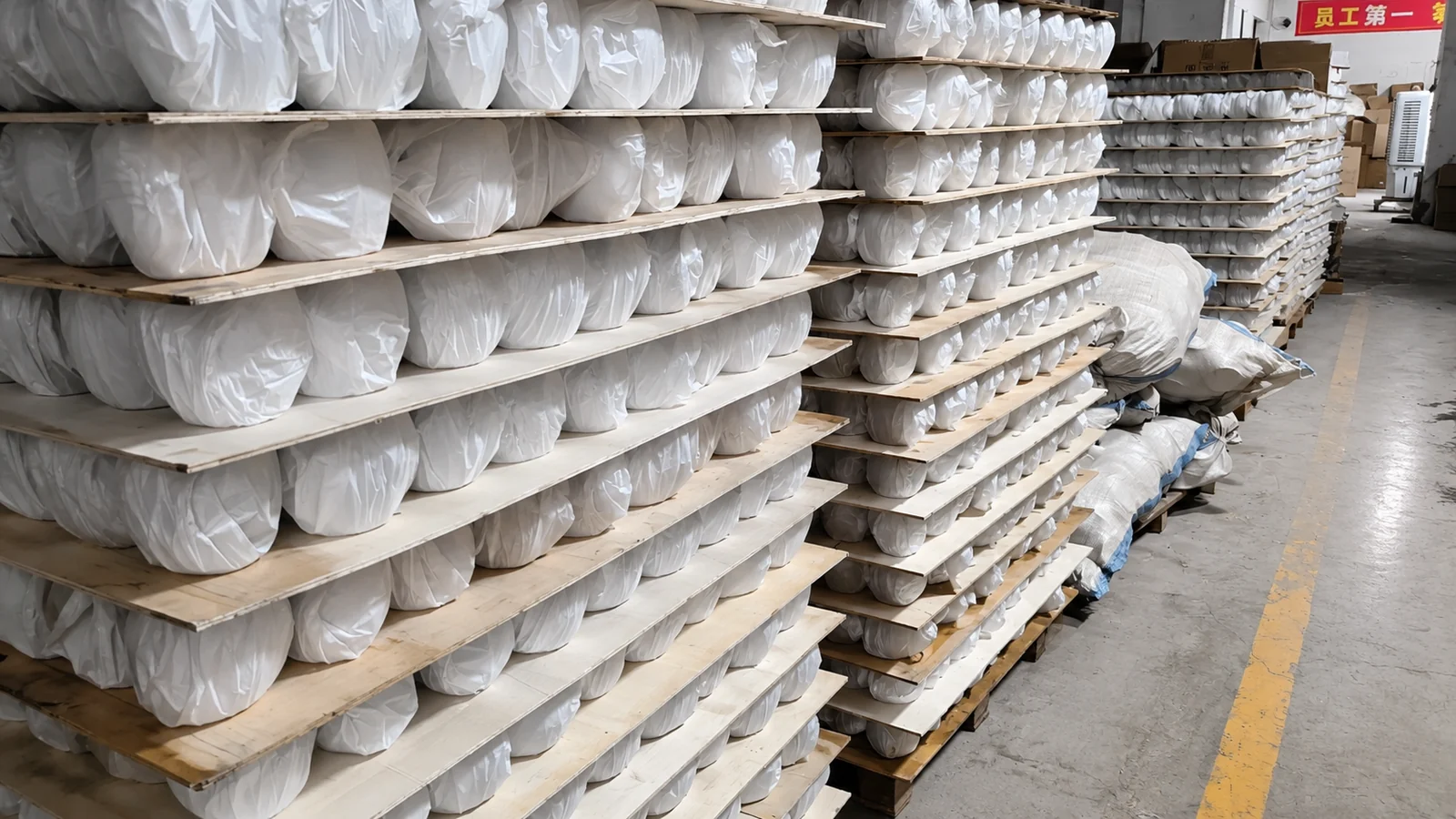
For online sales, the brand should define whether the factory pack ships directly or enters a fulfillment center that adds another outer pack. We can provide packed dimensions after the configuration is approved, but the buyer or fulfillment partner should confirm its parcel standard. See our export packaging page before approving artwork.
QC follows the drinkware brief
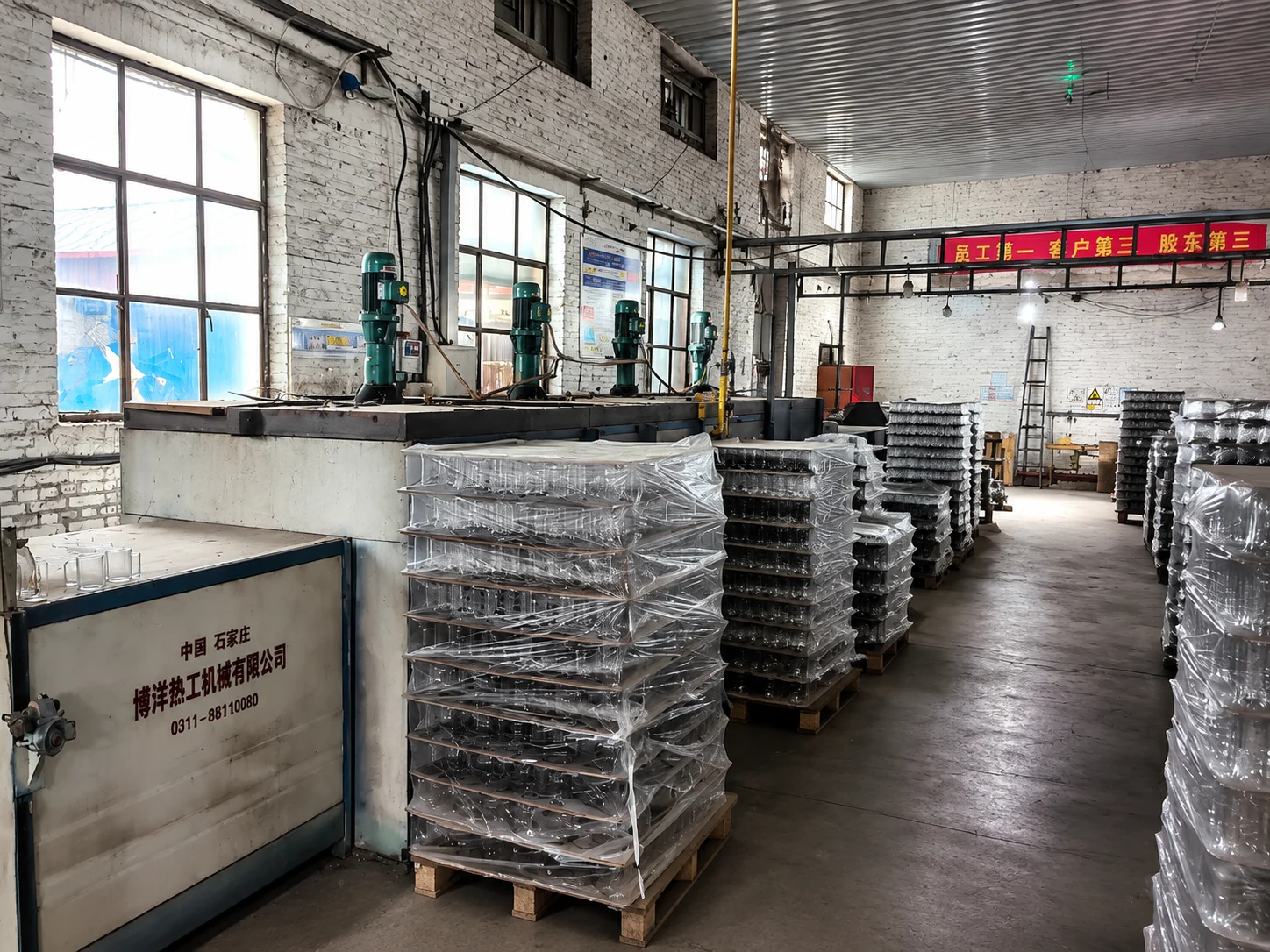
Our QC checklist is built from the approved coffee SKU. It can cover identity, dimensions or capacity tolerance where agreed, rim and base condition, handle or double-wall appearance, component fit, logo version and position, set completeness and carton count. The acceptance criteria should match the manufacturing route rather than using one generic “perfect glass” rule.
We separate critical function from visible variation. A sharp rim condition or wrong component is not the same issue as a small appearance variation within the approved route. Buyers should identify what would make the item unsafe, unusable or commercially unacceptable. If a third-party inspection is planned, its checklist and release rule must be agreed before goods are ready.
Bulk production time is then quoted from the approved route. We do not give one universal number. Current clear items, decoration, custom packaging and new molds have different stages. Artwork approval, component readiness and inspection booking may control the date as much as glass production.
Price the sellable coffee product
When a buyer compares quotes, it should compare the same finished item: glass, decoration, accessory, retail pack, master carton, inspection scope and Incoterm. A cup that appears inexpensive may have a high carton volume or require a pack redesign. A double-wall gift set and a single-wall café tumbler should not be evaluated on unit glass price alone.
We ask for a target commercial position—not as a request for the highest possible price, but to avoid proposing a development route that cannot fit the channel. A café replacement item, a roastery gift set and a premium subscription product carry different packaging and margin logic.
Buyer FAQ
What glass capacity should a coffee brand choose?
Start with actual recipe fill, ice, milk and headspace, then verify total capacity on a physical sample. Catalogue capacity alone does not show how the finished drink will look or feel.
Is double-wall glass always better for coffee?
No. It offers a particular visual and handling route but changes capacity, shape, weight and QC points. Compare it with single-wall or handled options against the beverage and sales channel.
What is the MOQ for branded coffee glasses?
MOQ is confirmed per model, size, color, logo and pack. Some current models show a verified 500–1,000-piece trial range, while double-wall construction, custom color, components and printed packaging may require different minimums.
How long does a coffee cup sample take?
Current-model preparation is commonly 5–10 days once the sample scope is confirmed. Decoration, custom color, components, molds and complete packaging receive a separate estimate; courier and approval time are additional.
Can you match our Pantone logo exactly?
Pantone can define the target, but glass transparency, decoration process and viewing conditions affect appearance. We approve a physical decorated sample and agree on a realistic tolerance before bulk work.
Can the same pack be used for café supply and online sales?
Not automatically. Café cartons, retail presentation and parcel delivery create different handling risks. We review the complete distribution route and separate presentation from transport protection.
Can you make heat-resistance or dishwasher claims?
Only when the exact product, intended condition, test basis and care instruction support the claim. We do not apply a generic material or category statement to every model and decoration.
Send us the drink brief
Tell us the beverage, intended fill, service or sales channel, preferred construction, quantity per version, branding, components, pack, destination and launch window. We will identify current models, open verification points, sample stages and MOQ logic.
Explore coffee and tea glassware, read our café sourcing guide, or send a coffee-brand RFQ. We will help you approve the cup as a sellable and usable product, not only as a rendering.